A premix vs bean-to-cup comparison should cover the office routine as well as the tasting. Will the drink still suit the team when ten people want coffee, the pantry is busy and someone has to clean up? Test those conditions before choosing.
Try the drinks your team actually orders, in the cup size you plan to use. Then compare the ingredients, cleaning routine and monthly bill. Neither category wins every office: the details of the proposed setup decide it.
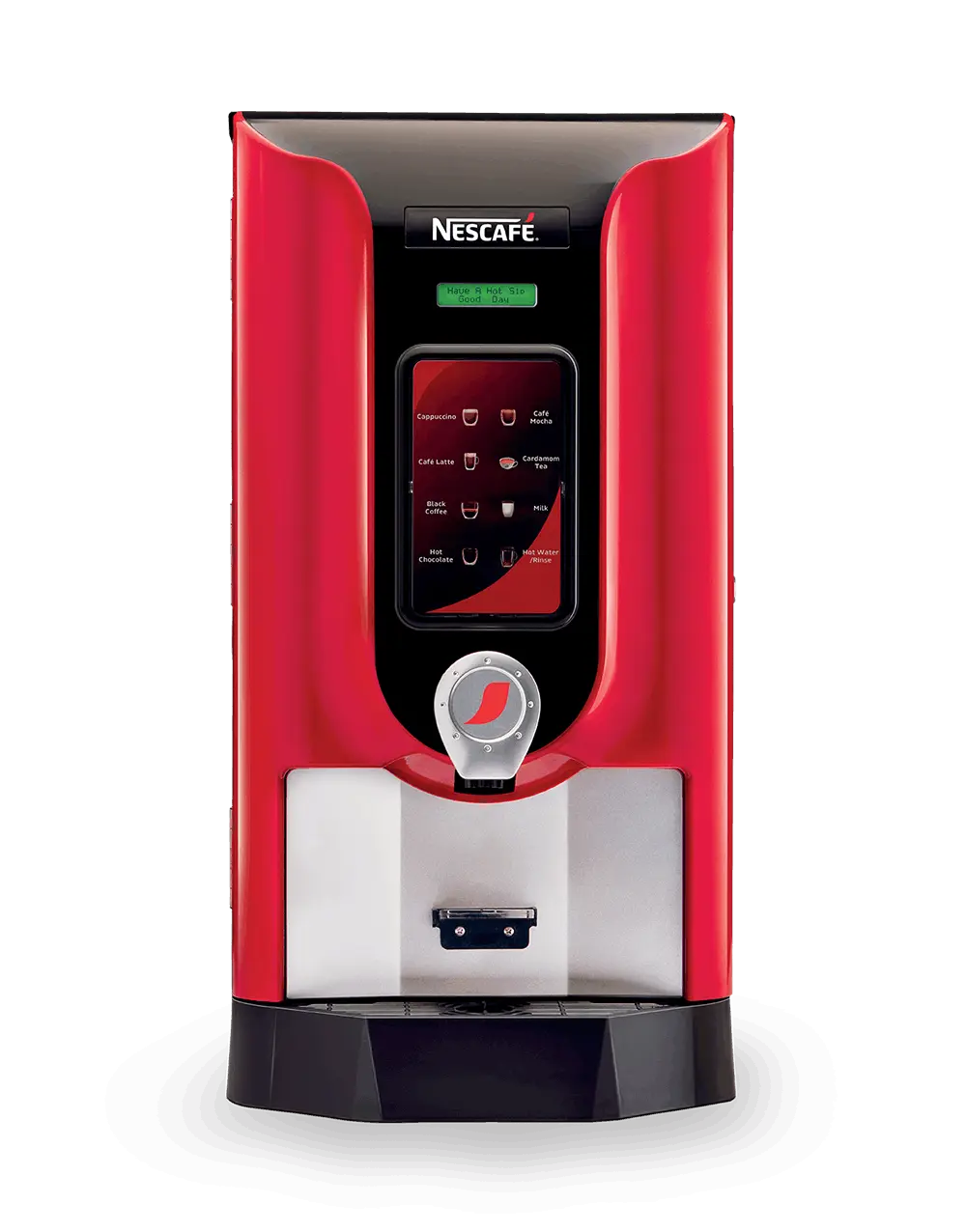
NESCAFÉ Solution 2.0, shown as a soluble-system reference from our existing website. It does not represent every premix or bean-to-cup configuration.
Premix vs bean-to-cup: understand the two approaches
A premix-based system prepares beverages using the premixes specified for the machine. A bean-to-cup coffee system prepares coffee from beans; other menu ingredients depend on its configuration. An instant-soluble system is another category and should not automatically be treated as identical to either.
Nestlé Professional's range identifies equipment across these categories. Use the category to shortlist possibilities, then confirm the exact model, menu and ingredients. Avoid assuming every tea or chocolate option follows the same process as its coffee selection.
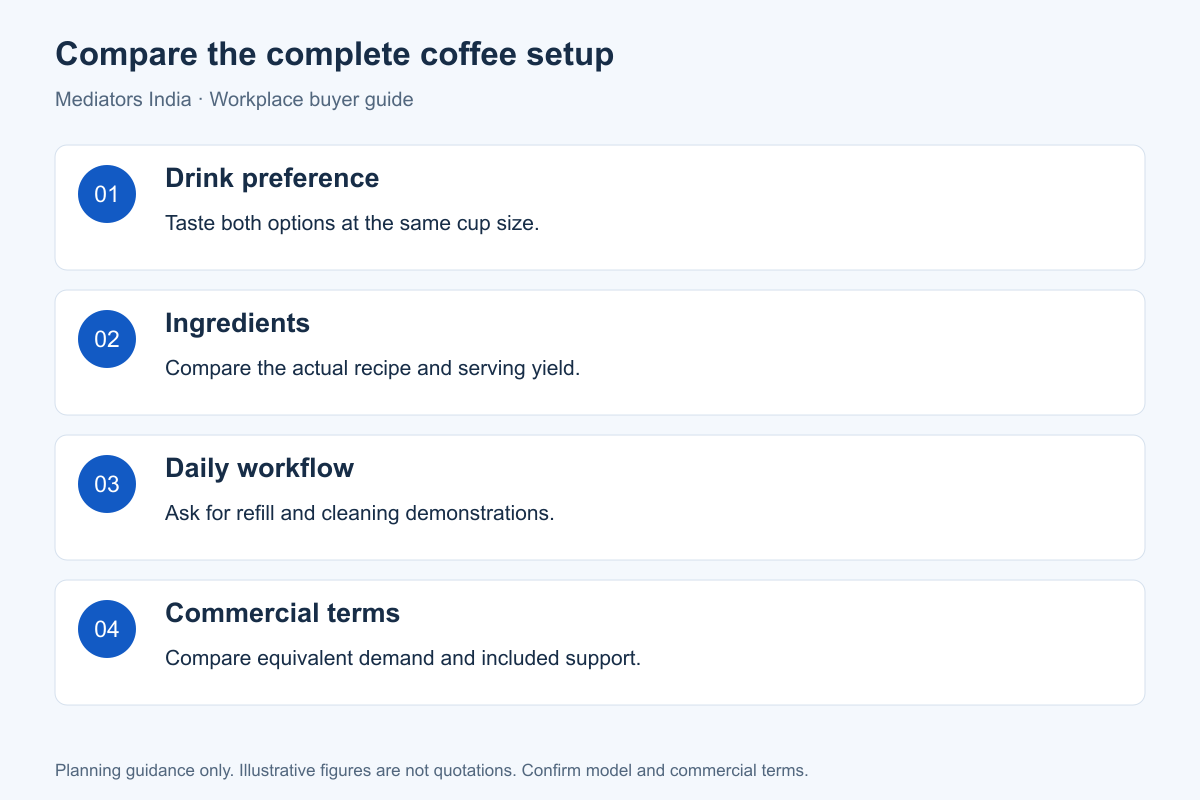
Original planning graphic. Any figures shown are illustrative; confirm commercial and technical details.
Compare the drink you will actually serve
Ask for the same cup size and a comparable drink style during tasting. Record what your team likes about the samples: strength, sweetness, milk balance and the overall experience. A black coffee comparison does not tell you everything about a milk-based drink.
If different recipe settings are available, agree which setting the cost estimate uses. A proposal based on a lighter recipe can appear cheaper than the configuration your team preferred. The final quotation should reflect the intended drink, not just the lowest possible ingredient use.
| Decision | Premix shortlist | Bean-to-cup shortlist |
|---|---|---|
| Coffee preparation | Confirm compatible premix and recipe | Confirm beans, recipe and other ingredients |
| Tea and other drinks | Check configured options | Check whether and how the model provides them |
| Routine tasks | Demonstrate refill and cleaning | Demonstrate refill and cleaning |
| Busy breaks | Test the intended drink mix | Test the intended drink mix |
| Budget | Compare complete proposal | Compare complete proposal |
Ask about workflow and cleaning
Have the supplier show the daily tasks for each proposed setup. Ask how supplies are replenished, which parts need attention and who performs cleaning. If the configuration uses milk equipment, clarify its handling and cleaning instructions.
Do not assume automatic cleaning means no manual work. Equally, do not assume one entire equipment category always requires a particular staffing level. Make a checklist from the model's instructions and agree who will follow it at your office.
Compare cost at equivalent demand
Ask for ingredient yields, equipment charges and service coverage at your expected monthly volume. Keep installation, deposits, utilities, cups, cleaning supplies and applicable taxes visible. Confirm whether any minimum purchases affect the bill.
As an illustrative sensitivity example dated 22 October 2026, a ₹2 difference in ingredient cost across 1,100 drinks adds ₹2,200 monthly. Over 12 months it adds ₹26,400. This is arithmetic only, excluding GST and every other cost; it is not a measured price difference between premix and bean-to-cup systems. Obtain real recipe and pack prices before judging value.
Test peak demand at the demonstration
Give the supplier the number of drinks likely to be requested during your busiest break. Ask for the proposed cup size and drink mix to be demonstrated. Consider how queues, refills and cleaning interruptions affect that period.
A daily output figure is not a promise that every recipe will be served at the same speed. Ask what conditions support any performance claim, and confirm that those conditions resemble your pantry.
Give the tasting a simple scorecard
Bring a small group representing black-coffee, milk-coffee and tea drinkers. Sample the proposed drinks in the intended cups and record sweetness, strength, temperature preference and whether people would choose them daily. Use your own pass criteria; a scorecard is an office decision aid, not a scientific quality rating.
A Reddit office-premix discussion raises excessive sweetness, while a clinic/office buyer's discussion asks how to balance taste, automation and low demand. These are individual experiences, not evidence that a whole brand or category is good or bad. They are useful prompts to test your own setup.
Two concrete shortlists: Spectra Triple Option is described as premix-based; Amigo is described as bean-to-cup. The published Amigo page describes a separate milk-cooling arrangement. Neither category name tells you that every drink is brewed from beans or that cleaning is unnecessary.
Repeat a chosen drink after several consecutive servings. Record the recipe used in the accepted sample and attach it to the quotation. If the machine uses a different water source at your office, assess the installed result too: BUNN's water guidance explains why water composition matters to beverages and equipment. No particular filter or water specification is prescribed here.
Frequently asked questions
Are ground coffee and instant coffee interchangeable?
No. Ground beans do not dissolve like instant coffee. Use only ingredients approved for the machine's preparation system; do not put an improvised ground-coffee blend into a premix canister.
Does bean-to-cup always taste better?
No universal preference follows from the category. Beans, recipe, milk arrangement, water and upkeep all matter. Taste the proposed drink and compare the actual routine and cost.
Can premix be made without sugar?
That depends on the product and recipe. If sugar is part of the powder, removing an added-sugar setting does not remove the sugar already present. Check the ingredient label.
Which option is faster during a tea break?
Compare the exact models at the same cup size and menu. A rated daily capacity is different from the time needed for your queue of mixed drinks.
How should I compare cleaning effort?
Watch the daily closing routine for both configurations. List tasks, required products and the trained person responsible; do not infer effort from an automatic-cleaning feature alone.
Which would work in your pantry?
Shortlist the setups that meet your team's preferences and operational needs, then compare their complete terms. If the choice is close, record the assumptions rather than declaring a category the universal winner.
Browse the Mediators India machine range and use our office selection guide to prepare your requirements. Request a like-for-like tasting and a proposal for your location. Model availability, ingredients and commercial terms will be confirmed.