There are two half-used packs in the pantry cupboard. Nobody is sure which was opened first. The new delivery is already sitting in front of them.
A shared pantry does not need a complicated system to avoid this. It needs one clear place for the label information and a routine people will actually follow. Start with the Farmley Trail Mix pack you buy, rather than borrowing storage advice from a different snack.
Keep the original instructions with the product
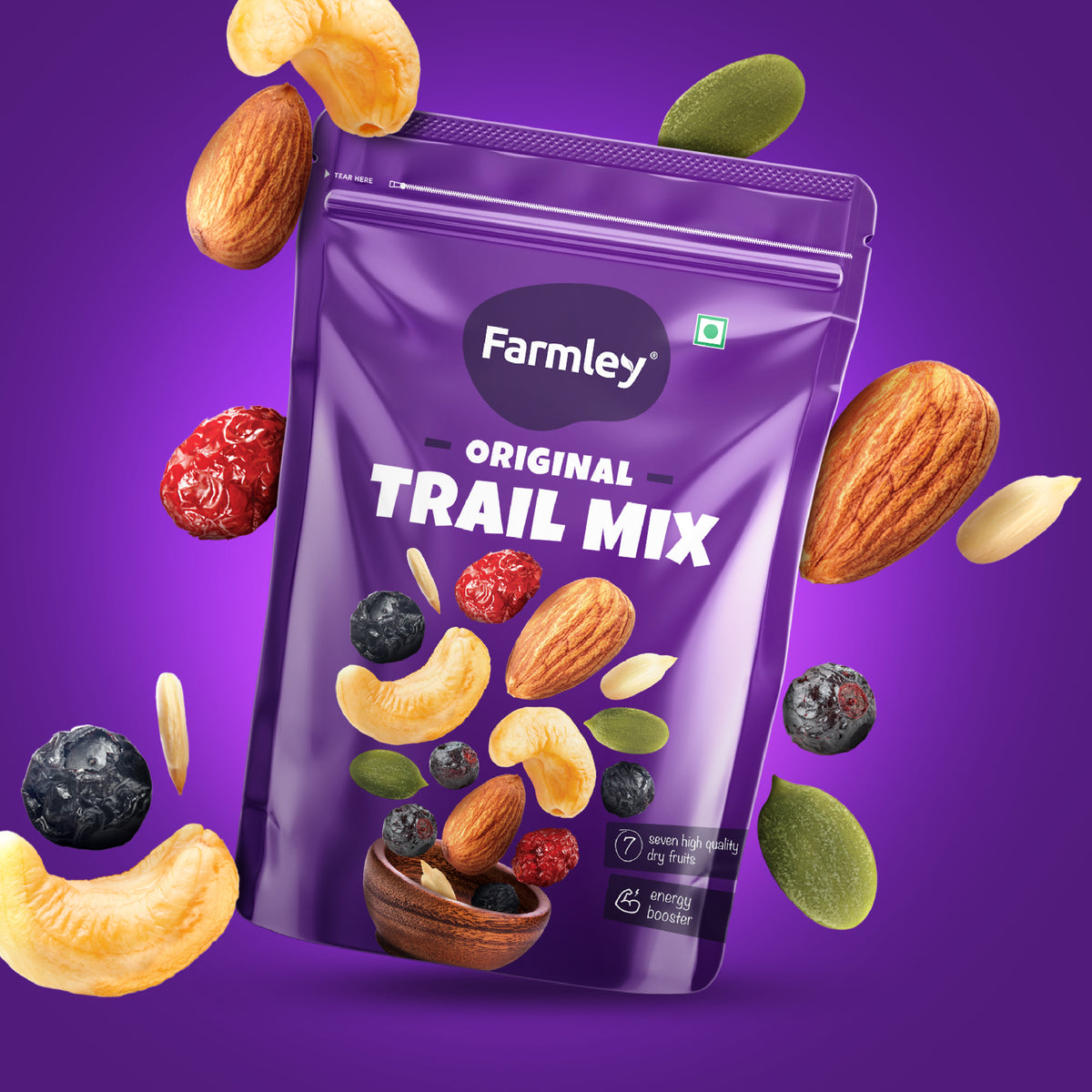
The official 7-in-1 Trail Mix page identifies a 200 g product. For actual pantry handling, ask for the current offered pack and read its storage and after-opening directions. Do not treat a website’s unopened shelf-life statement as permission to keep an opened pack for the same period.
This guide deliberately gives no universal “use within” duration or storage temperature. Those details need the exact label or manufacturer guidance. If the wording is unclear, resolve it before setting a pantry rule.
Make a small opening record
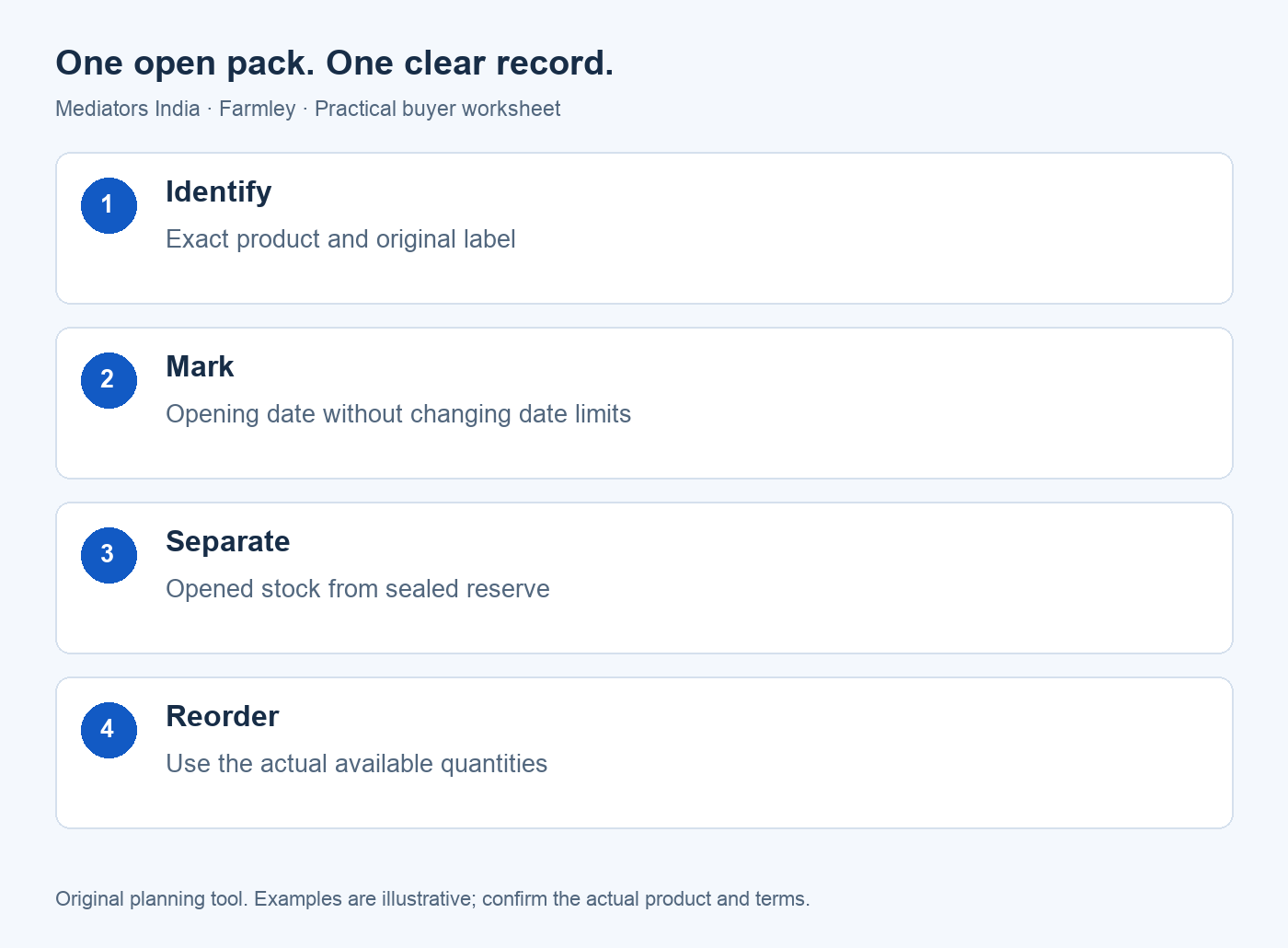
Write the opening date, product name and the identity of the original pack on the office’s stock record. Keep batch and date information available so someone covering the pantry can identify what is in use. An office opening-date sticker adds traceability; it does not extend the manufacturer’s date.
| Log field | Why it belongs there |
|---|---|
| Product and variant | Stops different mixes being treated as identical |
| Batch and marked date | Connects the stock to its original pack |
| Opening date | Shows the order in which packs were started |
| Label instructions | Gives the handling reference |
| Remaining sealed stock | Separates reserve stock from an opened pack |
If your approved routine uses a separate container, retain the original label and identity with it. A tidy unlabelled container is harder to manage than an identifiable pack.
Do not open tomorrow’s stock today
Issue stock according to the actual service plan. If one pack is already in use, somebody should decide whether a second is needed for a meeting, rather than opening it because it is easier to reach. Keep newly received stock from hiding the earlier dated eligible stock.
Where date markings differ, choose the next eligible pack according to the marked dates and your approved process. Do not just assume that the carton delivered first always has the earliest date. Keep any questionable or damaged pack out of the available count while it is checked.
Count sealed and opened stock separately
For purchasing, a line such as “three sealed packs plus one opened pack” is more useful than “about four.” The opened pack may not cover the next meeting, and it should not silently reduce a reorder that was planned in sealed units.
Record what gets discarded under your handling process as well. That makes the next pack-size decision more informed without inventing a claim that one format always reduces waste.
Agree the routine before increasing the order
Use the mix selection guide for choosing between products. Use this storage log once a product has been chosen. In a repeat-order enquiry, include the exact pack reference and ask for the label information needed by your pantry team.
Frequently asked questions
How long does an opened Farmley Trail Mix pack last?
Use the specific label or obtain manufacturer guidance. This article does not assign a universal after-opening duration.
Is the unopened shelf life the same as after-opening guidance?
Do not assume that. Read both the date marking and any directions relevant to opening and storage.
Can we transfer the mix to a container?
Follow the product instructions and the office process. Retain product, batch, date and label information with anything transferred.
Should an opened pack count as a full pack when reordering?
Record it separately from sealed stock so the next order reflects usable, identifiable quantities.
Does an opening-date sticker replace the original date?
No. It is an office traceability aid and does not change the manufacturer’s marking.