A bowl of mixed snacks sounds like the easiest part of a meeting. It becomes less straightforward when one person asks what is in it, another prefers a different mix and nobody has kept the outer packet.
For Farmley trail mixes and Panchmeva, make the choice before decanting anything. The name, current label and serving method matter more than a photograph of a full bowl.
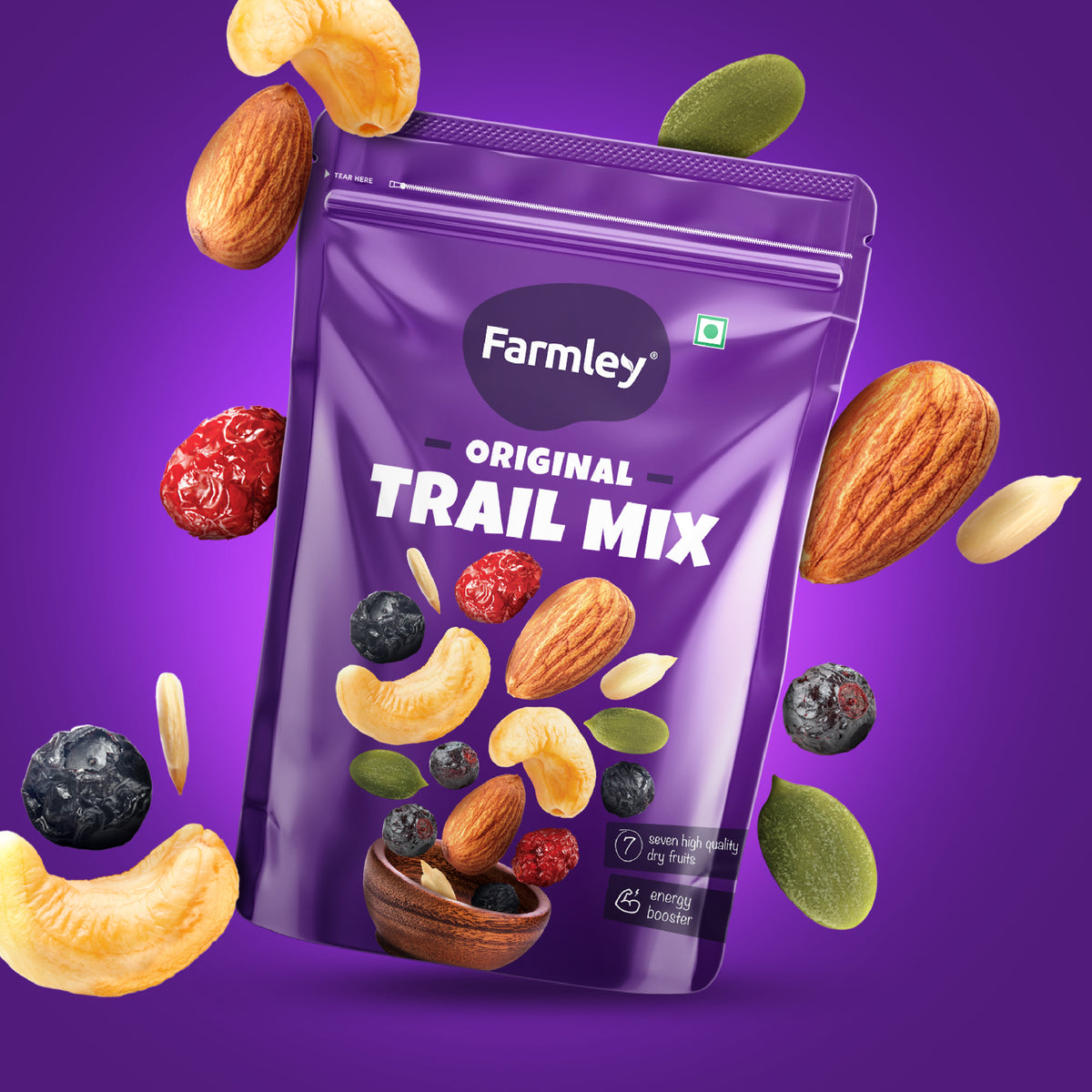
Compare named products
The 7-in-1 Trail Mix listing describes a 200 g product with fruit, seeds and nuts, and identifies almonds and cashews in its allergen information. Farmley also has a separate Panchmeva listing. These are different products, not interchangeable names for any dry fruit assortment.
Use the current pack to record the complete ingredients for each offered option. Do not infer a fixed ratio of nuts to fruit from the product name or the position of ingredients in a promotional image.
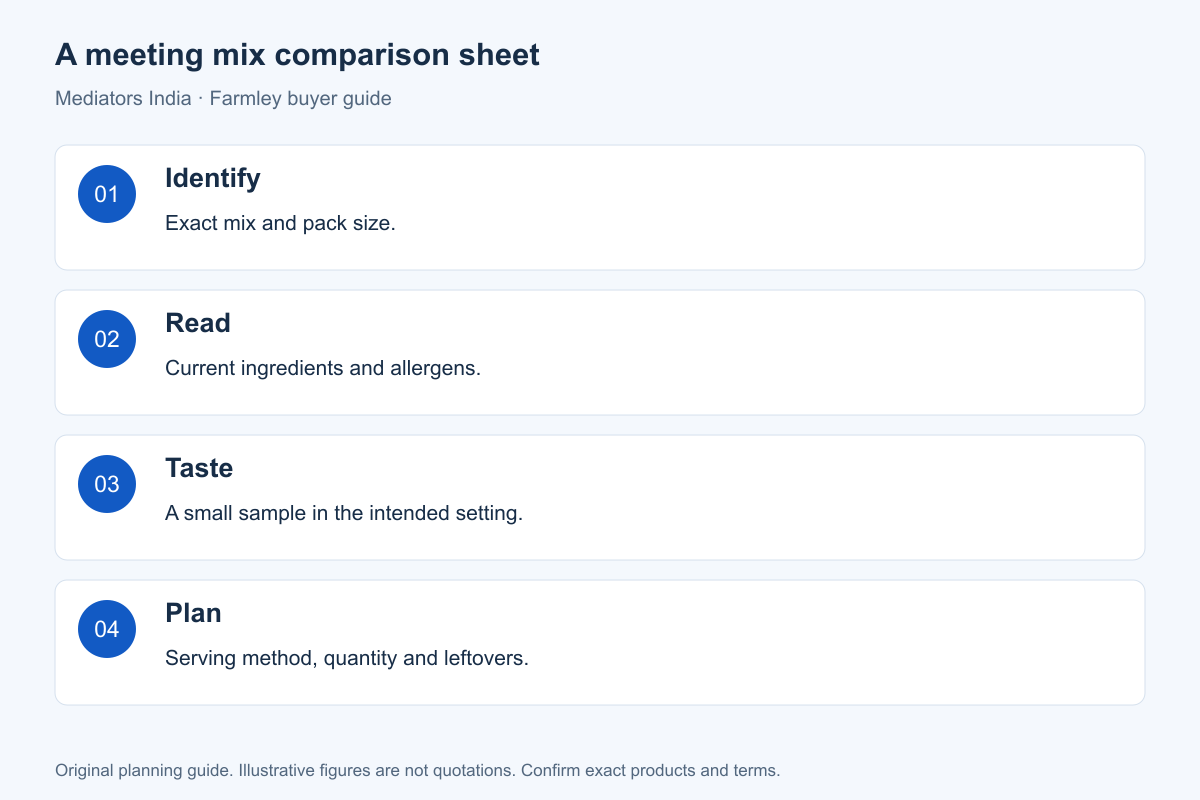
Match the mix to the occasion
Ask whether you are choosing a shared meeting snack, a pantry item or a sealed take-away pack. A group working around documents may prefer a different format from an informal break where food is served by an attendant.
Taste samples in that setting. Record whether people like the fruit-and-nut balance and whether the chosen format is easy to serve. You are collecting preferences, not conducting a nutritional trial or establishing that one mix is best for everyone.
| Decision | Trail Mix sample | Panchmeva sample |
|---|---|---|
| Exact offered pack | Record SKU and net weight | Record SKU and net weight |
| Label information | Save current ingredients and allergens | Save current ingredients and allergens |
| Taste comment | Record in the team's own words | Record in the team's own words |
| Serving approach | Sealed unit or measured allocation | Sealed unit or measured allocation |
| Next step | Accept, retaste or request another format | Accept, retaste or request another format |
Count grams before ordering bowls
For an illustrative allocation, ten people offered 20 g each need 200 g. The 20 g figure is a planner's choice, not a recommended portion. It also does not mean every attendee will take exactly that quantity from a shared bowl.
A listed 200 g pack could cover that theoretical allocation from zero stock, before any loss or extra demand. For twenty-four people at the same assumed allocation, 480 g is required, so three such packs provide 600 g and leave a theoretical 120 g balance. Keep the remainder plan separate from the serving calculation.
Keep ingredient information available
Retain the packaging when serving food out of its original container. The current label is more useful than a handwritten sign saying only “dry fruits.” Confirm the preparation and serving arrangements if guests ask about allergens; this article cannot establish that a shared setup is suitable for an individual.
Do not describe a mix as allergen-free or suitable for all diets because it is vegetarian or contains familiar ingredients. Those are different questions. Ask for the exact information you need before agreeing the menu.
Compare costs after choosing a workable format
If the current quoted price excluding GST for a 200 g pack is P, a theoretical 20 g allocation costs P ÷ 10 in product alone. Actual purchase cost depends on whole packs ordered, not just grams served. Add GST, delivery and serving materials separately; no product price is supplied here.
Explore Farmley mixes or request the current pack labels and sample options. Include the meeting size and whether snacks will stay sealed or be served.
Frequently asked questions
Are Trail Mix and Panchmeva the same product?
No. Compare the named current products and their own labels rather than treating the names as interchangeable.
Can we tell the exact ingredient ratios from a picture?
No. Use the product information and seek clarification if a particular composition matters.
Is the 20 g allocation a nutrition recommendation?
No. It is a hypothetical quantity for demonstrating an order calculation.
Should we throw away the outer packet after serving?
Keep it available while the food is offered so current product and allergen information can be checked.
Is cost per serving the same as the purchase total?
No. You pay for whole packs; any usable balance remains stock and should be recorded.