Two offices can make the same number of drinks and receive different ingredient bills. One mostly serves tea. The other has a busy reception desk where visitors often choose a milk-based coffee or hot chocolate.
If you are checking a NESCAFÉ Solution 2.0 price or rental quote, the drink mix deserves its own line in the calculation. This guide shows that part of the budget. It is not another rental-versus-purchase comparison.
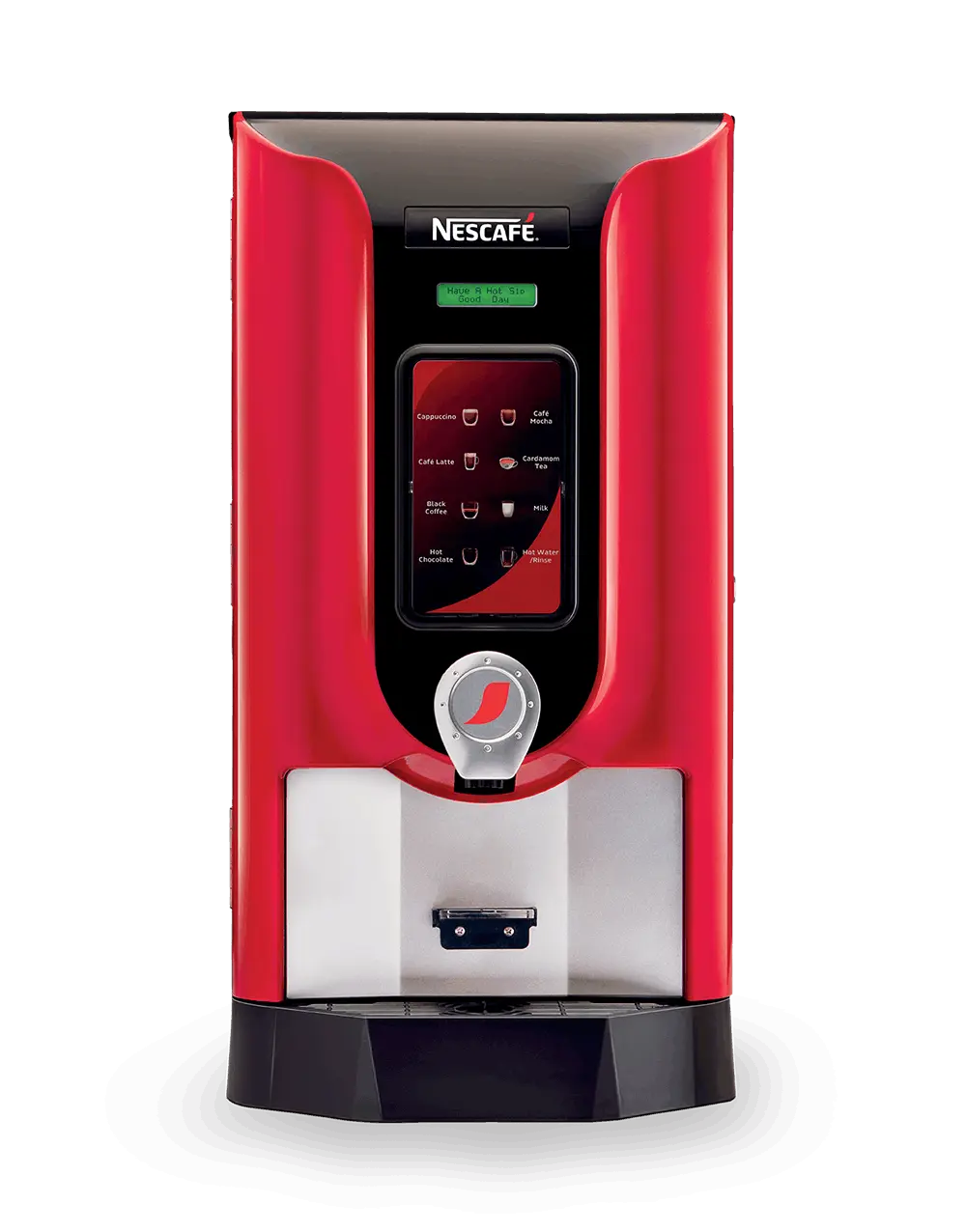
Product reference from the existing Mediators India website; confirm the current offered pack or model and configuration. This is not a customer installation.
Start with the drinks, not a single average
Make one row for each drink you expect to serve. Use a normal week if you already have a pantry; otherwise begin with estimates and revise them when usage is known. Record serving size alongside the count.
The current Solution 2.0 manufacturer page describes a soluble beverage system with coffee, tea and chocolate choices. Your proposal should identify which recipes and ingredients will actually be supplied. A menu on a webpage is not a recipe-cost sheet.
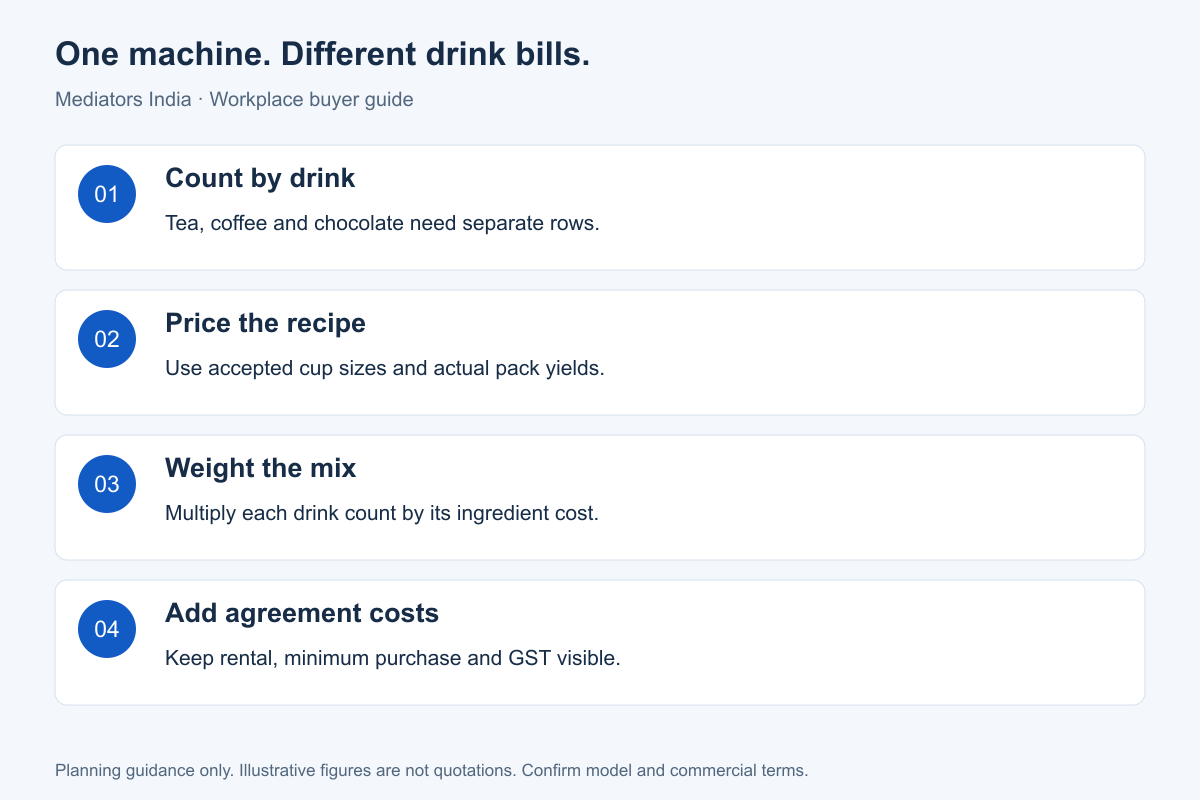
Original planning graphic. Any figures shown are illustrative; confirm commercial and technical details.
See what a different mix does to the bill
The following is an illustrative worksheet dated 22 October 2026, not a price list or a claim about actual Solution 2.0 yields. It assumes 1,100 monthly drinks, hypothetical ingredient-only costs of ₹6 for tea, ₹8 for coffee and ₹10 for chocolate, all excluding GST. The prices are invented solely to show the method.
| Drink | Tea-heavy office: servings | Ingredient cost | Coffee-heavy office: servings | Ingredient cost |
|---|---|---|---|---|
| Tea at assumed ₹6 | 660 | ₹3,960 | 220 | ₹1,320 |
| Coffee at assumed ₹8 | 330 | ₹2,640 | 660 | ₹5,280 |
| Chocolate at assumed ₹10 | 110 | ₹1,100 | 220 | ₹2,200 |
| Total | 1,100 | ₹7,700 | 1,100 | ₹8,800 |
The second mix costs ₹1,100 more per month in this made-up example, although the total drink count is identical. The ingredient averages are ₹7 and ₹8 per drink. Neither is a real quote, and neither is the total cost of operating the machine.
Ask how each recipe was costed
For every row, request the named ingredients, current pack price, pack quantity, recipe dose and serving volume. Where a recipe uses several ingredients, each contribution belongs in the calculation. Expected pack yield should match that recipe.
Keep the accepted tasting recipe with the costing sheet. Otherwise, a change made to improve taste can leave you comparing an old cost estimate with a new drink. Record revisions instead of quietly changing a dosage in your spreadsheet.
Add the agreement after the ingredients
Place equipment rental, any setup charges and service costs below the drink calculation. Keep a refundable deposit separate from recurring expense so its cash-flow effect is visible without calling it a monthly operating cost.
If the offer has a qualifying ingredient purchase, ask how purchases are counted and what happens below the threshold. Do not automatically add the full minimum on top of already counted ingredient spending: that can double-count the same obligation. Use the written contract's treatment.
The manufacturer's machine FAQ describes rental arrangements in India. A search for a machine “price” should not be answered with an invented outright purchase figure for a rental-only offer. Obtain the actual arrangement for your address and model.
Put a quieter month beside the normal one
Reduce the drink count while keeping your expected mix, then apply the agreement's actual terms. Some costs move with consumption; others may remain. That second column is particularly useful around office closures, travel or changing attendance.
For budgeting, list GST separately using the supplier-confirmed treatment. Add delivery, cups, water, electricity, cleaning materials and staff effort where relevant. The worked table excludes all of these, as well as rental, service, deposits, finance and wastage; none is assumed free.
Keep a simple monthly check
Compare the forecast mix with actual servings and stock purchases. If chocolate is more popular than expected, the answer is a revised forecast—not an unexplained “machine cost increase.” Investigate recipe and price changes separately.
See the Solution 2.0 overview and send a recipe-level quote request. Include normal and quiet-month usage so the comparison is useful from the start.
Frequently asked questions
Is ₹7 or ₹8 the real Solution 2.0 cost per cup?
No. Both are averages from invented ingredient prices in this worksheet. Get current recipe and commercial figures for your proposed setup.
Why not use one cost for all drinks?
Different recipes can use different ingredients and quantities. One average is useful only after you know how the drinks are mixed.
Does the example include rental and GST?
No. It is ingredient-only and excludes GST, rental and the other operating costs listed above.
Should I add a minimum purchase to the ingredient total?
Only according to the agreement. Check whether the minimum is a qualifying purchase level, a charge or another arrangement; avoid counting the same spending twice.
Can I get an outright purchase price instead?
Confirm the actual available arrangement with the supplier. Do not read this rental-focused worksheet as an offer to sell a NESCAFÉ machine.