“The tea is too sweet” sounds like a simple complaint. Then someone asks for stronger tea, another wants less milk and a third likes the original cup. Changing everything at once is unlikely to produce a useful answer.
Before choosing a tea-and-coffee setup, make the tasting brief more precise. You want a drink your team accepts and an offered recipe the operator can reproduce—not a one-off sample that nobody can explain later.

Product reference from the existing Mediators India website; confirm the current offered pack or model and configuration. This is not a customer installation.
Separate sweetness from strength
Ask tasters to describe one thing they would change. Is the tea flavour too light? Is the spice too strong? Is the cup sweeter than they normally drink? Those comments lead to different conversations with the supplier.
Keep preferences separate from health claims. Liking a less-sweet drink does not establish a product's nutritional suitability. For ingredients, allergens and nutritional information, use the current pack and reliable product documentation.
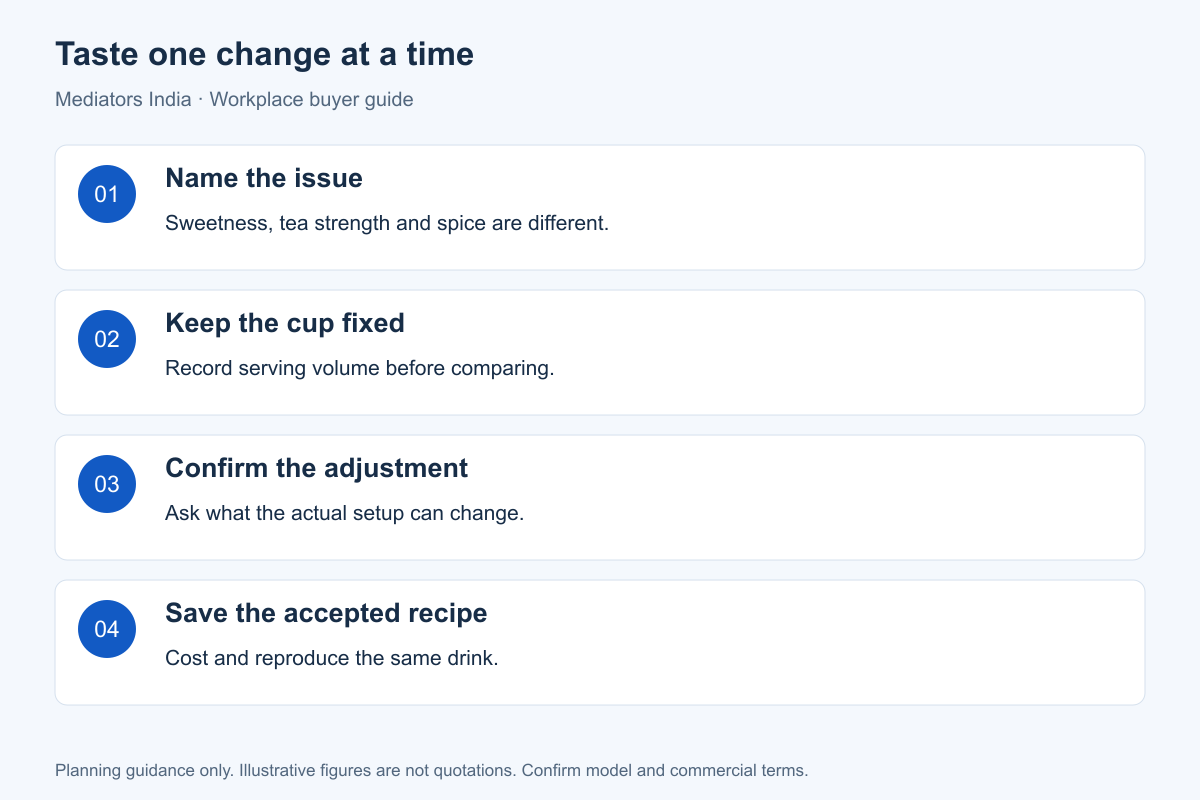
Original planning graphic. Any figures shown are illustrative; confirm commercial and technical details.
Find out where the sweetness comes from
Look at the actual ingredients used in the demonstrated recipe. Some blends contain sugar within the product rather than using a separate sugar addition. The current Masala Gold ingredient listing, for example, includes sugar and milk solids.
That does not tell you what every machine can adjust. Ask the demonstrator to explain whether a proposed change alters a separate ingredient, the whole premix dose, the water volume or something else. Do not assume a “less sugar” button exists, or that reducing a blend changes only sweetness.
Use a short tasting sheet
Keep the cup size and named ingredients visible. Start with the offered recipe, discuss one possible adjustment with the supplier, then taste again if the setup supports it. There is no universal setting recommended here.
| Sample note | What to record | Example comment, not a real customer result |
|---|---|---|
| Recipe reference | Ingredients, setting and cup size | Sample A, intended office cup |
| Sweetness | Acceptable or change requested | Sweeter than I would choose |
| Tea flavour | Light, acceptable or strong | Would prefer more tea flavour |
| Milk and spice | Specific comment | Spice is fine; milk balance differs |
| Decision | Accept, retest or compare another option | Retest only the confirmed adjustment |
Invite a small mix of regular tea drinkers rather than letting one enthusiastic taster decide for everyone. Explain that the exercise is a workplace preference check, not a scientific product test or a claim that every person will agree.
Recalculate after an accepted change
A change in recipe can affect ingredient use and pack yield. Have the supplier update the cost assumptions for the accepted serving rather than leaving the original brochure estimate in the quotation.
For a purely hypothetical illustration, if ingredient use changes by ₹0.50 per serving at 600 monthly servings, the ingredient budget changes by ₹300 a month, excluding GST. This is invented arithmetic, not a product price or an assurance that a particular adjustment costs more. Rental, cups, utilities, service, cleaning and other costs are outside that example.
Try the routine, not only the cup
Have the operator make the accepted drink several times during the demonstration, using the agreed recipe. Record what is being tested and who confirms the setting. If the setup cannot produce an acceptable option, compare a different approved ingredient or model rather than improvising a workaround.
Do not put household tea, extra powders or an unapproved ingredient into a vending canister because someone online suggested it. Compatibility needs confirmation for the specific equipment. This guide is about asking better questions, not modifying machinery.
Leave with a recipe reference
Ask for the final recipe or configuration reference, cup size, named products and revised costing assumptions. Keep the operating instructions with the pantry team and a copy of the accepted proposal with the buyer.
Browse tea and dairy premixes and request a tasting. Describe the current complaint plainly; “less sweet, in our usual cup” is a more useful beginning than “better tea.”
Frequently asked questions
Can the machine always reduce sugar separately?
No. It depends on the ingredients and configuration. Sugar may already be part of a blend, so ask what the actual setup can change.
Will adding more water solve the taste?
It changes the serving as well as the drink. Discuss the approved recipe with the supplier and retaste rather than assuming dilution solves only sweetness.
Can we add loose tea or household ingredients?
Use only ingredients approved for the equipment. A tasting complaint is not a reason to improvise a canister mixture.
Is the tasting scorecard a scientific comparison?
No. It is a simple way to record your team’s preferences and the offered recipe consistently.
Should the cost sheet change after the recipe changes?
Check it. The ingredient quantities and expected yield used for the quote should match the recipe you accepted.