You budget for a coffee machine, then realise the bigger question is what goes into the cups every day. A half-empty office on Friday and a packed meeting room on Monday can produce very different pantry bills.
Start with drinks served, then add equipment and support. The worksheet below uses illustrative figures, not Mediators India prices, so you can replace them with your own usage and quotation.
Start with a normal working month
Count drinks for a typical week if you already have a pantry. Record tea, coffee and other beverages separately. Note busy meeting days and quieter attendance days rather than multiplying your maximum headcount by an assumed habit. Include drinks provided to visitors and any separate reception or showroom counter.
For a new setup, make an initial estimate and review it after actual usage becomes available. For example, 50 drinks per working day over 22 days gives 1,100 drinks monthly. This is an illustrative demand assumption, not a recommended intake or machine capacity.
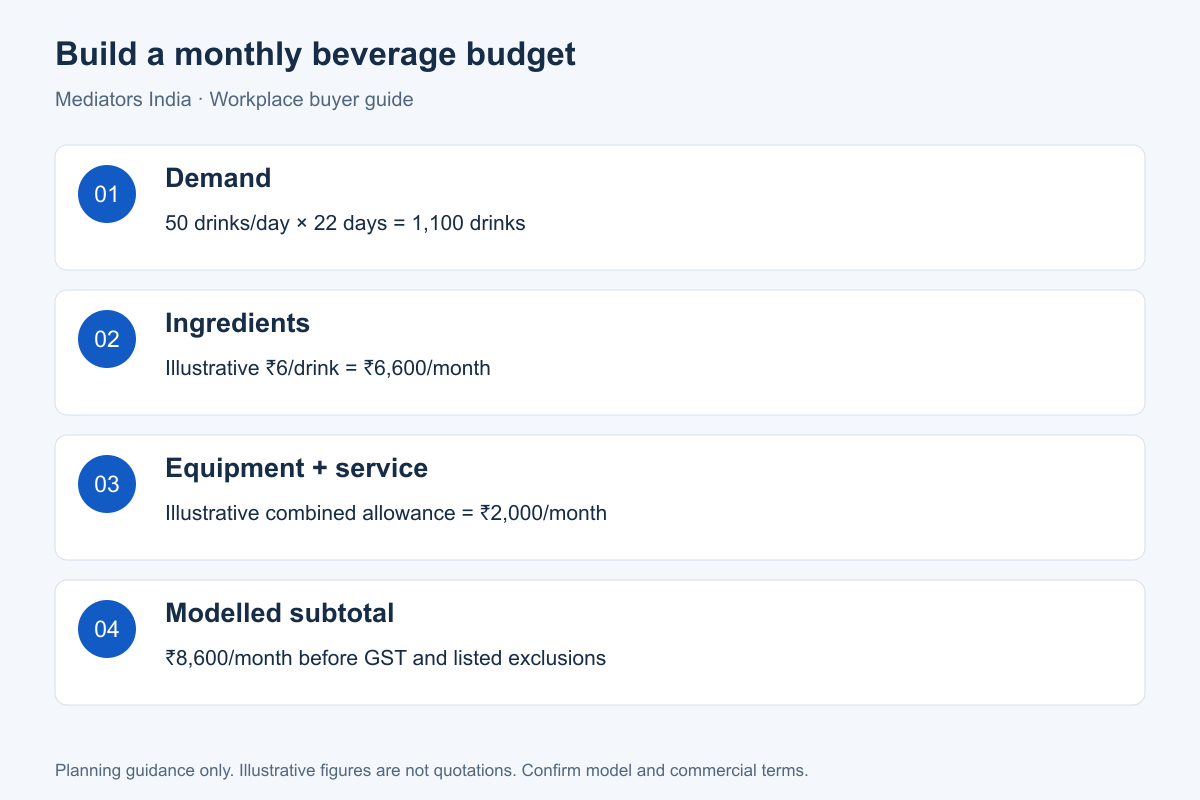
Original planning graphic. Any figures shown are illustrative; confirm commercial and technical details.
Work out ingredient cost per served drink
Ask for pack price, usable pack weight, the proposed dosage and expected servings. A ₹600 pack that yields 100 servings would cost ₹6 per serving in this invented example. If it yields only 80 servings at the selected recipe, the figure becomes ₹7.50. The pack price has not changed; the serving yield has.
Keep serving sizes and drink quality comparable when reviewing quotations. A smaller cup can appear cheaper without meeting your team's expectations. Ask how milk, tea, sugar or chocolate ingredients are billed for each configured drink and whether any items are purchased separately.
A transparent monthly worksheet
Want to try your own figures? Use the Tea Coffee Cost Calculator to compare a local seller, staff-prepared drinks and a complete-premix machine setup. Enter your costs per kg and monthly allowances; the displayed yields are fixed planning assumptions.
All prices below are illustrative assumptions prepared on 22 October 2026. They are not quotations or verified market rates. Assume 1,100 drinks, ingredients at ₹6 per drink and a combined equipment-and-service allowance of ₹2,000 per month.
| Cost line | Illustrative monthly amount |
|---|---|
| Beverage ingredients | ₹6,600 |
| Equipment and service allowance | ₹2,000 |
| Modelled subtotal | ₹8,600 |
| Subtotal divided by 1,100 drinks | ₹7.82 per drink |
This example excludes GST, deposits, delivery, installation, electricity, water, cups, cleaning materials, staff time, waste and exceptional repairs. The ₹2,000 allowance is not an available plan or promise that service is included. Ask which charges your actual proposal covers before comparing it with this worksheet.
Test a quieter month as well
If consumption falls to 660 drinks and the same ₹2,000 equipment allowance remains, ingredients at the assumed ₹6 would be ₹3,960. The modelled subtotal becomes ₹5,960, or ₹9.03 per drink. Your total expenditure falls, but the equipment allowance is spread across fewer drinks.
A contractual minimum purchase can change that result. Ask what is payable below the qualifying consumption level and whether the minimum is based on value, quantity or eligible products. Do not assume a quieter month automatically reduces every part of the bill.
Compare proposals on the same basis
Request a consistent cup size, drink mix, daily demand and comparison period. Keep refundable deposits separate from running expenses while still including them in the cash you need upfront. Ask for applicable taxes and any recurring increase to be shown clearly.
Before approving a budget, identify who pays for cleaning, servicing and replacement equipment during downtime. A short explanation in the quote is more useful than an unqualified claim of a low cost per cup.
Budget for the cup people actually drink
Start with a serving specification: for example, a 150 ml drink, selected recipe and agreed sweetness. Then calculate usable servings from the pack. Illustration only: a 1 kg pack dosed at 12 g yields about 83 theoretical servings; at 15 g it yields about 67. If that invented pack costs ₹600, ingredient cost rises from ₹7.20 to ₹9.00 per theoretical serving. Real yield can be lower because of rinsing, rejected drinks and stock losses. These are planning assumptions, excluding GST and all other costs.
Use a weekly reconciliation: opening stock + purchases − closing stock = stock used. Divide the associated ingredient cost by drinks actually served. Count milk, whitener and chocolate separately if they are separately supplied. This exposes a mismatch between the quoted recipe and the real bill without blaming the machine category.
| Budget test | What to record | Decision it supports |
|---|---|---|
| Normal week | Served cups and ingredients used | Real recurring budget |
| Quiet week | Same fixed charges, lower demand | Minimum-purchase risk |
| Taste trial | Recipe, cup size and acceptance | Whether the cheapest recipe is acceptable |
| Stock review | Open packs and dates | Avoiding unnecessary purchases |
Frequently asked questions
How do I calculate coffee cost per cup?
Divide the ingredient cost actually consumed by accepted drinks served. Add equipment and service separately to get a fuller cost. A pack's theoretical yield is a starting estimate, not a guarantee of usable drinks.
Does a smaller cup really save money?
Only if ingredient settings and consumption change accordingly. If people take two smaller cups instead of one larger drink, the assumed saving may disappear. Compare serving size and accepted daily consumption together.
How much does a 1 kg pack make?
It depends on the specified grams per drink. At an illustrative 12 g dose, 1,000 ÷ 12 is about 83 theoretical servings. Use the supplier's recipe for the exact product, not a universal yield.
What if the premix is too sweet?
Taste the exact product before agreeing supply. Some premixes contain sugar within the blend; a sugar button may not remove it. Check the label and compatible alternatives rather than changing ingredients without approval.
Should the budget include the machine deposit?
Show a refundable deposit in upfront cash requirements, separately from recurring expenditure. Confirm refund conditions and do not treat it as an automatic monthly expense or an assured refund.
Ready to put your numbers in?
Send your office location, expected daily cups, working days and preferred drinks. Ask for a monthly breakdown at both normal and low consumption. For the equipment decision, read our rental versus purchase guide. Then explore office beverage arrangements and request a proposal based on your requirements. Prices, equipment and terms will be confirmed before you decide.