The machine is advertised in cups per day. Your colleagues experience it in minutes before a meeting. Those are different ways of looking at the same equipment.
A useful demonstration recreates the busy break: several people arriving close together, choosing different drinks and finding cups. You do not need an elaborate test. You need a realistic group and someone with a stopwatch.
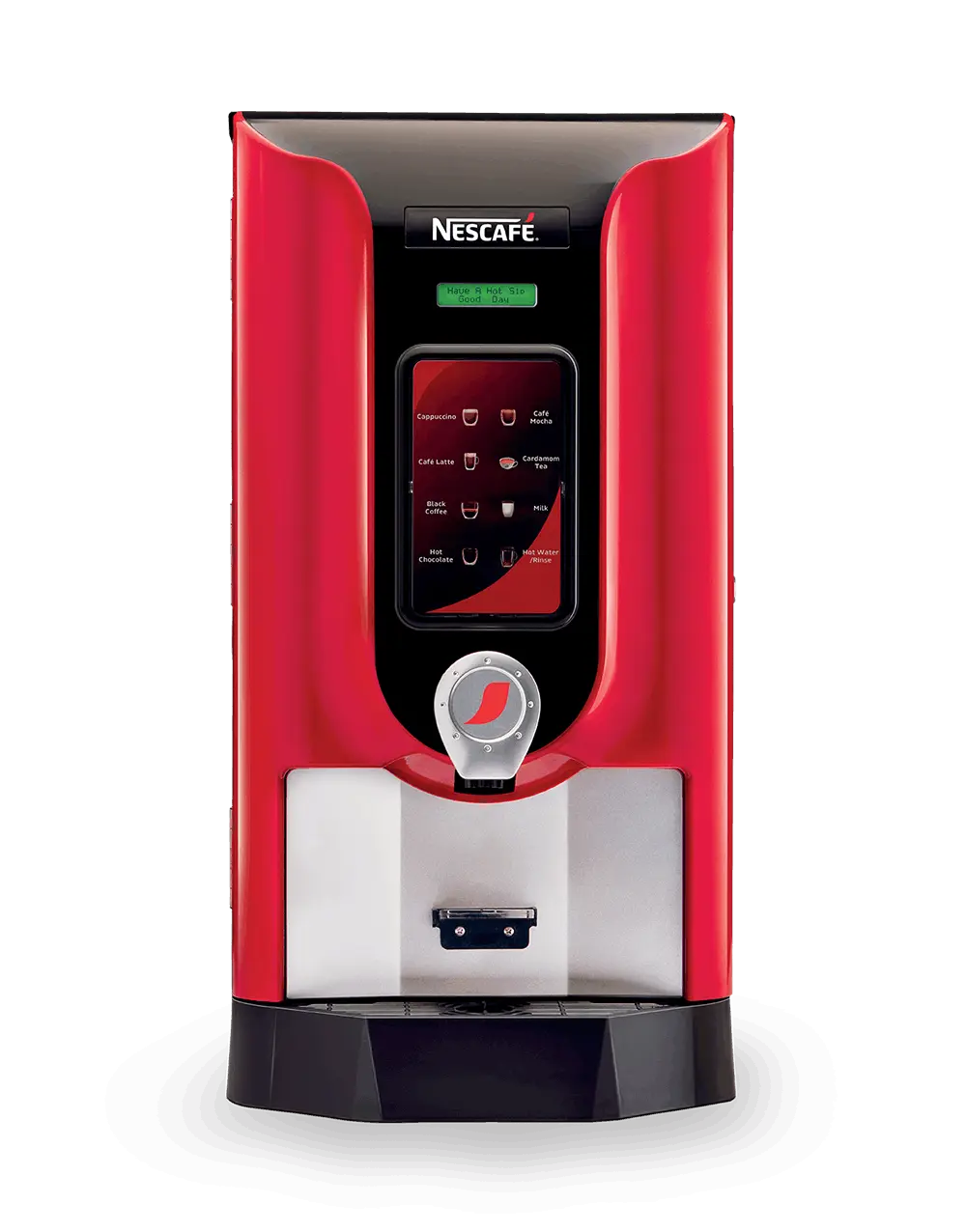
Product reference from the existing Mediators India website; confirm the current offered pack or model and configuration. This is not a customer installation.
Write down the peak you actually need
Start with the busiest likely serving interval, not total headcount. Perhaps a meeting ends and eight people want drinks before the next session. Treat that as your test scenario, then check it against the office's actual pattern.
Do not turn one hypothetical busy morning into a permanent demand forecast. Record how often the peak happens and whether visitors share the same machine. A rare event may need a different operational plan from a queue that forms every day.
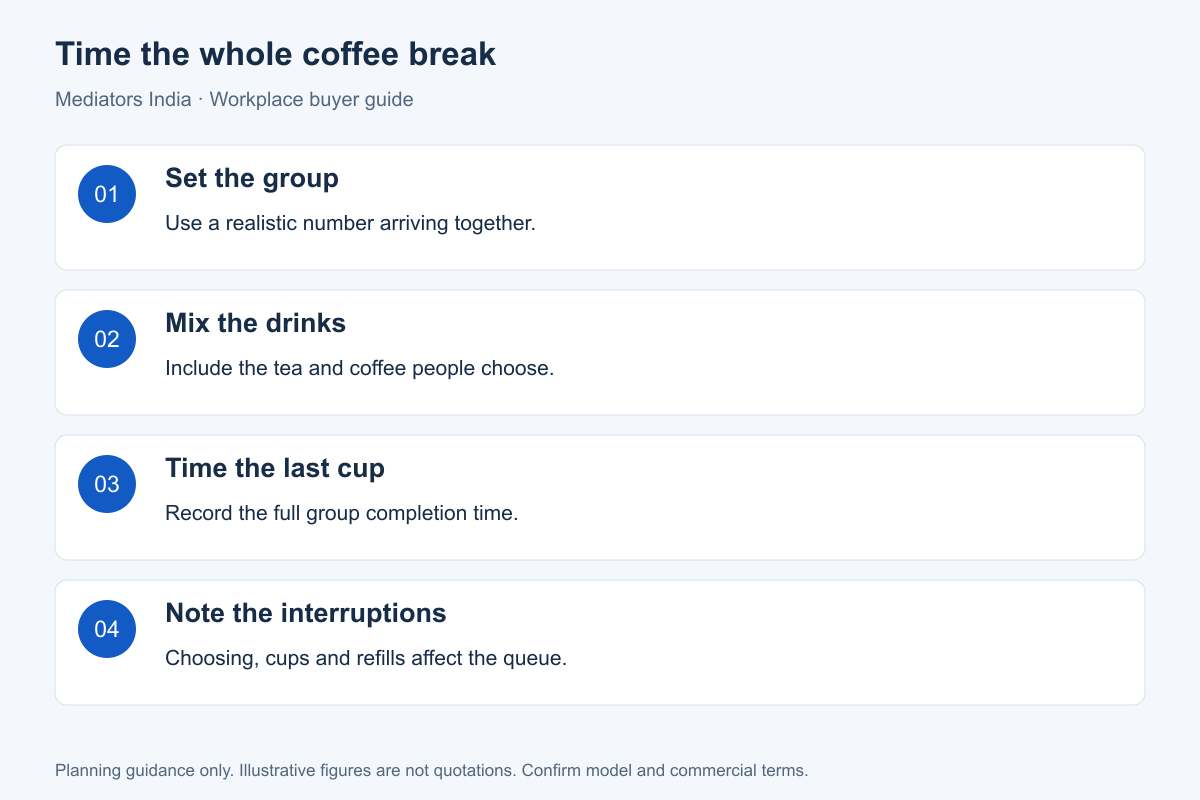
Original planning graphic. Any figures shown are illustrative; confirm commercial and technical details.
Read published speed with its conditions
The Solution 2.0 specification lists 2–3 cappuccinos per minute at 150 ml. The Spectra Triple option page lists 5 cups per minute at 100 ml. Different drinks and serving sizes make those headline figures an unsuitable like-for-like comparison by themselves.
Use the figures to ask better questions, then test the proposed menu at your intended serving size. A manufacturer's dispensing rate does not include every second someone spends deciding, collecting a cup or stepping away.
Run one complete group test
Have the demonstrator prepare the machine according to its instructions. Record the starting condition—ready to dispense, recently refilled or another agreed state. Choose a realistic mix and note the serving volume for each drink.
Start timing when the first person begins the process and stop when the last drink in the group is ready. Also note the first-cup time and any interruption. Repeat if useful, but label the observations as a demonstration, not a performance guarantee.
| Test record | What to enter |
|---|---|
| Scenario | Group size and drinks requested |
| Setup | Model, serving sizes and starting condition |
| First cup ready | Elapsed time from test start |
| Last cup ready | Elapsed time for the whole group |
| Interruptions | Choosing, cup placement, replenishment or other delay |
| Follow-up | Supplier explanation and any agreed retest |
Turn the result into a conversation
Suppose an illustrative test has eight drinks completed in four minutes. That is an observed group throughput of two drinks per minute, using 8 ÷ 4. These are invented numbers to explain the calculation, not a result from any machine or customer installation.
If your office wants that group completed within three minutes, the imagined result does not meet your chosen target. Discuss the cause before deciding the machine is undersized. A layout or cup-access problem is different from a dispensing constraint.
The target is yours to choose, based on how the office works. This article does not prescribe a universal maximum queue or promise that a published rate will be achieved at your site.
Look for the bottleneck around the machine
Watch where people pause. Does everyone read the menu for the first time at the front of the queue? Are cups behind the operator? Does the next person have to wait for someone to carry a tray away?
Discuss simple layout and communication changes with the supplier and your facilities team. Keep hot-drink handling, access and installation requirements appropriate to the actual site. Do not move equipment or alter connections as an informal queue fix.
Keep the test with the proposal
Write down the tested configuration, drink mix, serving sizes and observations. If a different model or recipe is offered later, ask whether the demonstration still represents it. Keep service and downtime terms as a separate agreement question; a fast demonstration does not establish breakdown support.
Explore office beverage setups or request a mixed-drink demonstration. Send the group size and intended drinks so the trial answers the question your office actually has.
Frequently asked questions
Is cups per day enough to choose capacity?
No. It does not describe how drinks are concentrated around a break. Record the busiest likely interval and test it.
Can we compare two published cups-per-minute figures directly?
Only after checking the drink, serving volume and test conditions. Different conditions may make the headline comparison misleading.
Does the four-minute example describe a real machine test?
No. It is invented arithmetic showing how to calculate group throughput. Record your own demonstration result.
Should the timer include choosing a drink?
For a workplace workflow test, record the whole process and its interruptions. Keep that separate from any narrower dispensing-only measurement.
What if the queue is still too slow?
Discuss the observed bottleneck and retest an agreed change. The answer may involve workflow, menu or equipment; do not assume one solution in advance.