Someone asks for a cappuccino. Someone else just wants a decent cup of tea. By the time a third colleague asks about hot chocolate, a simple coffee-machine search has turned into a menu discussion.
That is a useful place to start. Before comparing touchscreens or counting drink buttons, decide which drinks need to work well every day. A short menu that people enjoy is more useful than a long one nobody has tried.
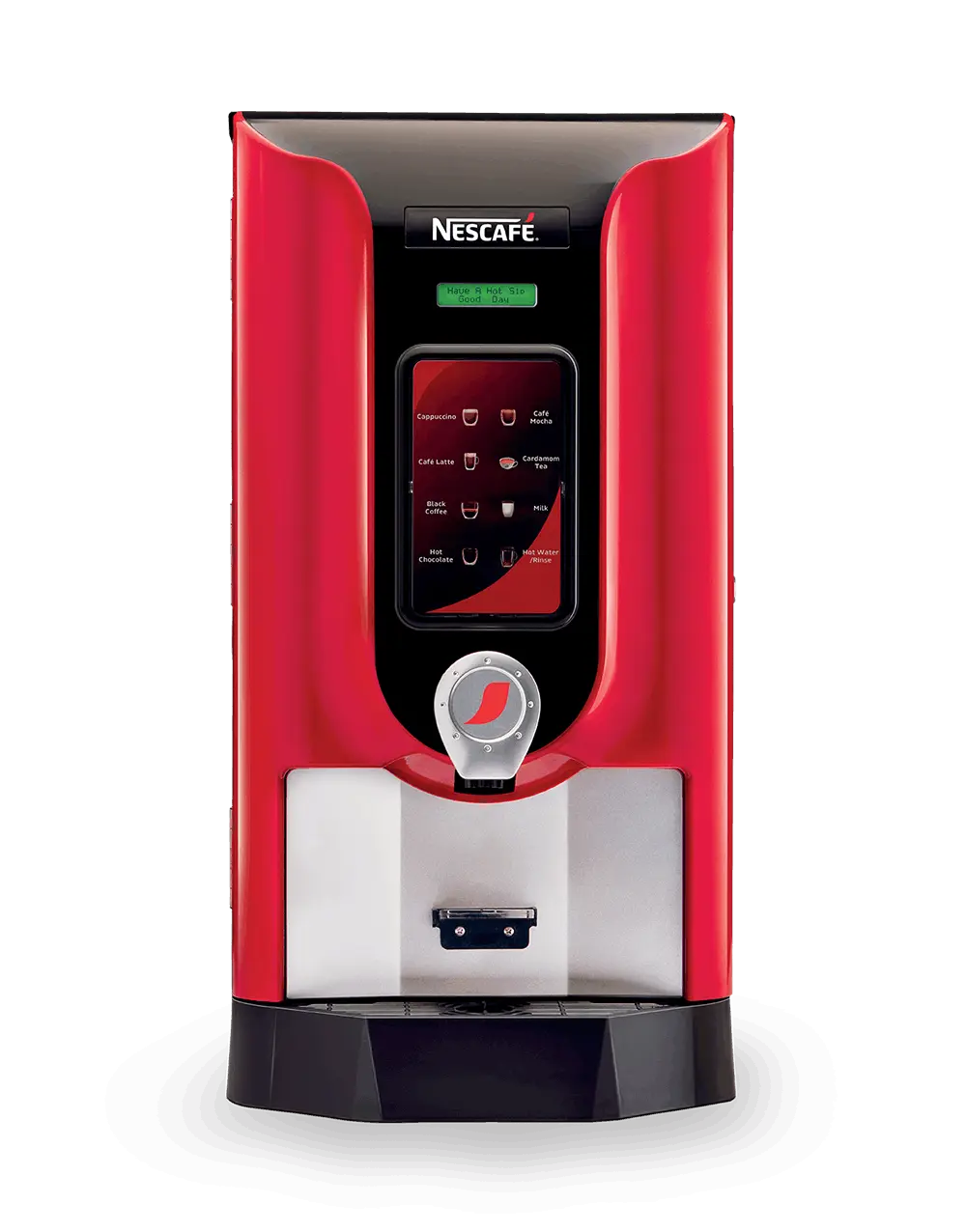
Product reference from the existing Mediators India website; confirm the current offered pack or model and configuration. This is not a customer installation.
Make a three-drink shortlist
First, write down your team's three most requested drinks and their usual serving sizes. Include the reception counter if you serve visitors there. Keep occasional requests separate: one person wanting a speciality drink once a month need not determine the whole setup.
Next, give each drink a simple status: essential, useful or optional. Then bring that list to a demonstration. This keeps the conversation grounded when a supplier shows you a much larger menu.
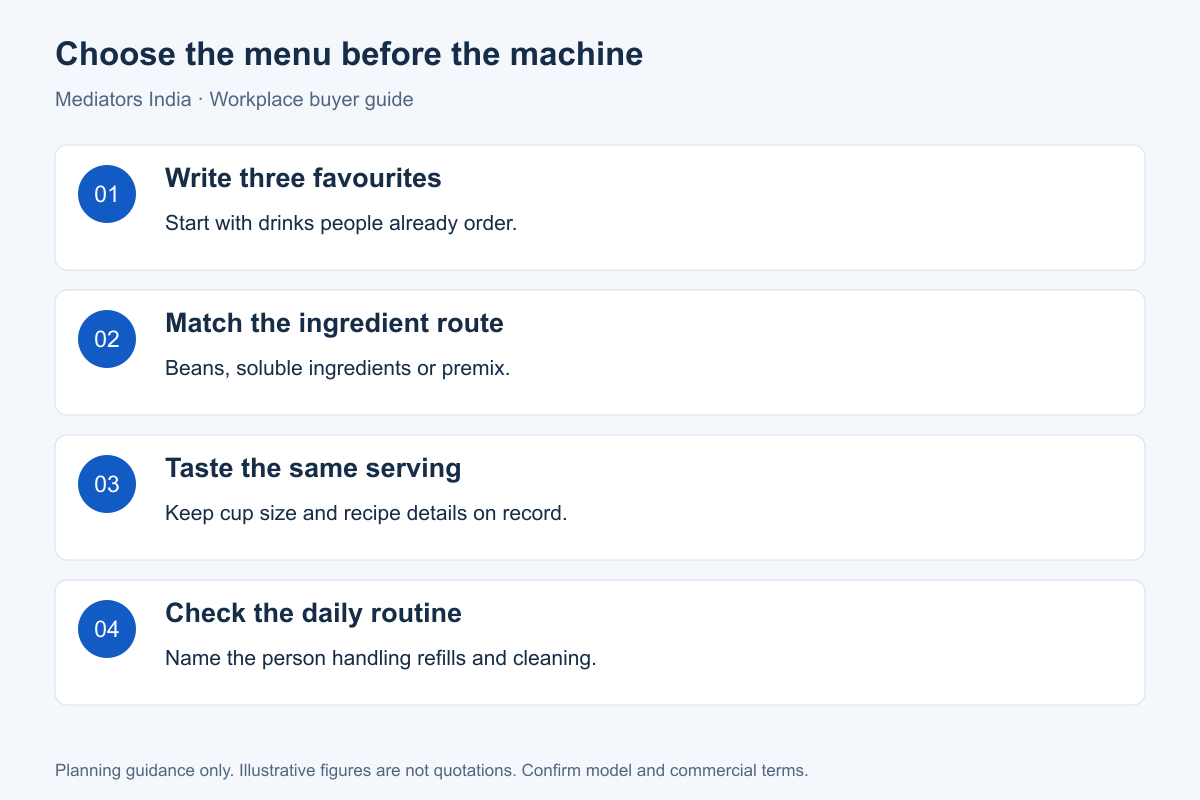
Original planning graphic. Any figures shown are illustrative; confirm commercial and technical details.
Three models, three starting points
The manufacturer describes Amigo as bean-to-cup, Solution 2.0 as instant-soluble and Spectra Triple option as premix-based. These are ingredient routes, not a ranking of taste.
| Starting point | What to explore at the tasting | What to write down |
|---|---|---|
| Amigo | Coffee prepared from beans, alongside the proposed wider menu | Exact recipe and ingredients for each drink |
| Solution 2.0 | Soluble coffee and the offered tea or chocolate choices | Which ingredients and accessories the proposal includes |
| Spectra Triple option | The proposed premix drinks | Which three selections will actually be configured |
A bean-to-cup label describes the coffee route; it does not mean tea or hot chocolate comes from coffee beans. Similarly, a soluble system and an all-in-one premix are not interchangeable descriptions. Ask the demonstrator to show what goes into each of your three drinks.
Taste the ordinary cup first
Also, start with the drink someone will take back to a desk, rather than the most elaborate sample. Use your intended cup. Record whether people would happily drink it again, what they would change and whether the supplier can actually make a proposed adjustment on that configuration.
A useful comparison sheet has one row per drink and one column per setup. Note sweetness, tea or coffee strength, serving volume and overall acceptance. Keep comments in plain language: “too sweet for me” gives more direction than a vague score of seven.
Try a second serving after the operator makes other drinks. You are checking the offered workflow as well as a single carefully prepared sample. This is a practical buyer exercise, not a laboratory test of consistency.
Look behind the menu screen
In addition, have the person who will run the pantry watch a refill and the instructed cleaning routine. Note where supplies, water arrangements, waste and accessories will go. A setup that makes an attractive drink may still require a routine your office has not planned for.
Then, separate essential tasks from optional extras. Who receives stock? Who checks for ingredients running low? Who covers the routine when the usual operator is away? Agree those answers while the equipment and its instructions are in front of you.
Compare the menu's cost, not just one drink
Furthermore, ask for a cost breakdown for your likely mix of tea, coffee and other drinks, using agreed portions and supplier-confirmed yields. Do not apply an espresso ingredient estimate to every item on the menu. Different recipes may use different quantities and products.
If the quotation assumes more drinks than your office expects, ask for another version at your realistic volume. Any rental, minimum purchase or service terms should be clear alongside the ingredient figures. Local model availability and the exact configuration need confirmation; this guide is not an offer for every model listed.
Take one useful brief to the demonstration
Bring three essential drinks, intended cup sizes, expected daily servings and the name of the pantry operator. Ask to leave with the demonstrated recipes and the matching written proposal.
Explore workplace machine options and the Solution 2.0 product page, or send your menu brief. That gives the next conversation a clear starting point.
Frequently asked questions
Does a longer menu mean a better machine?
Only if those extra drinks matter to your workplace. Begin with the drinks people will order regularly, then test those well.
Is Amigo the same as Solution 2.0?
No. Their manufacturer pages describe different coffee ingredient routes: bean-to-cup for Amigo and instant-soluble for Solution 2.0. Compare the actual offered recipes.
Will every drink on the manufacturer website be available in my setup?
Finally, do not assume so. Have the supplier list the configured selections, ingredients and accessories in your proposal.
Can we compare using our own cups?
Yes—request a demonstration at the intended serving size. A different cup or recipe makes the cost and taste comparison harder.
What should we decide before asking for a quote?
Your essential drinks, serving sizes, expected usage and who will operate the pantry are enough to make the first enquiry useful.