The strongest flavour often gets the loudest reaction at a tasting. That does not necessarily make it the snack people want beside their afternoon tea every day.
If you are choosing Farmley roasted makhana for a pantry, keep the trial small and give people a clear choice. The aim is an order you can explain, not a table full of half-open packs.
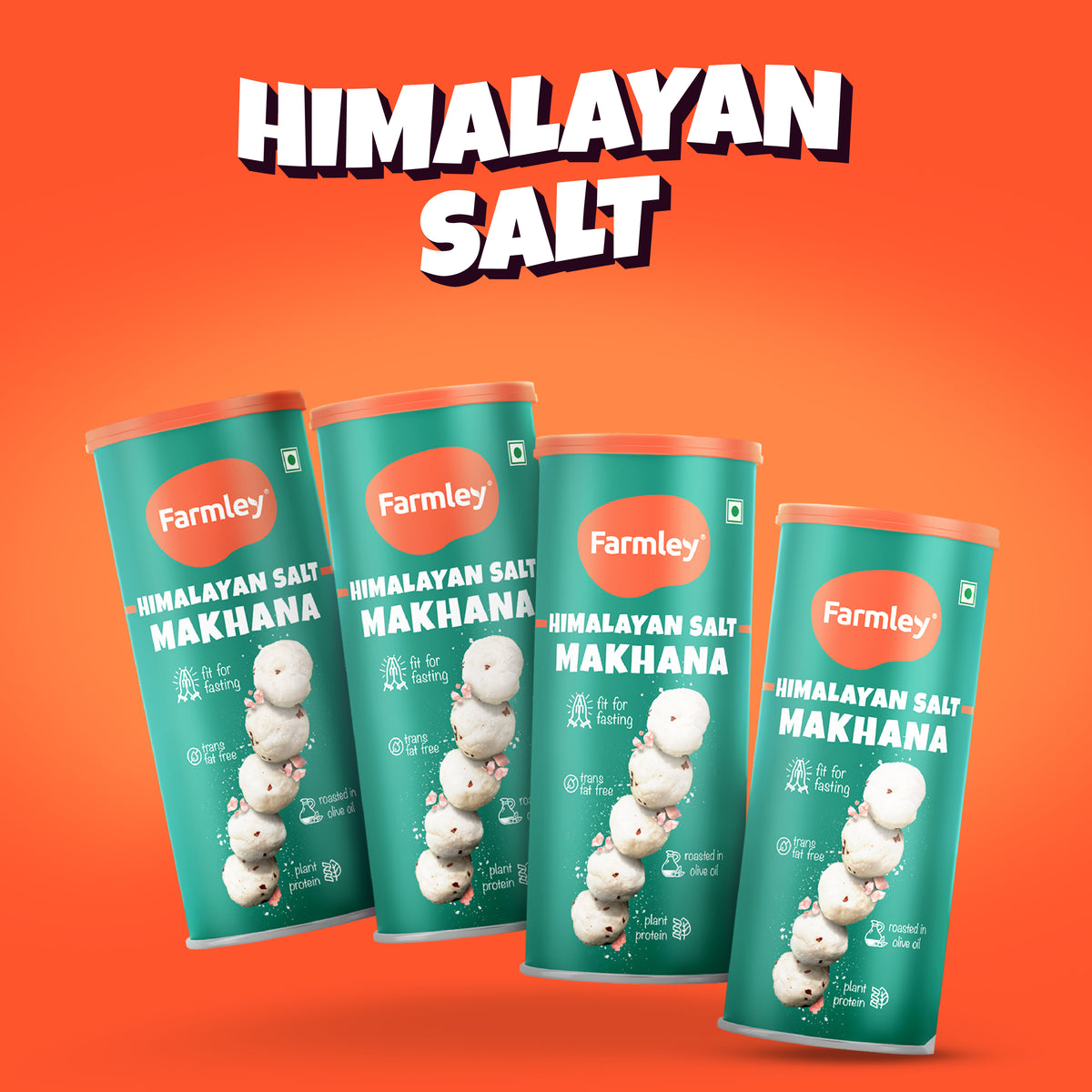
Pick the occasion before the flavour
Decide whether the snack is for an everyday desk break, a shared meeting or a take-away pack. Then shortlist two or three exact products. Ask what formats can actually be supplied locally before arranging a tasting around an unavailable pack.
The Farmley makhana page on Mediators India shows examples from the range and makes local pack availability subject to confirmation. Use it to begin a shortlist, not as a live stock list.
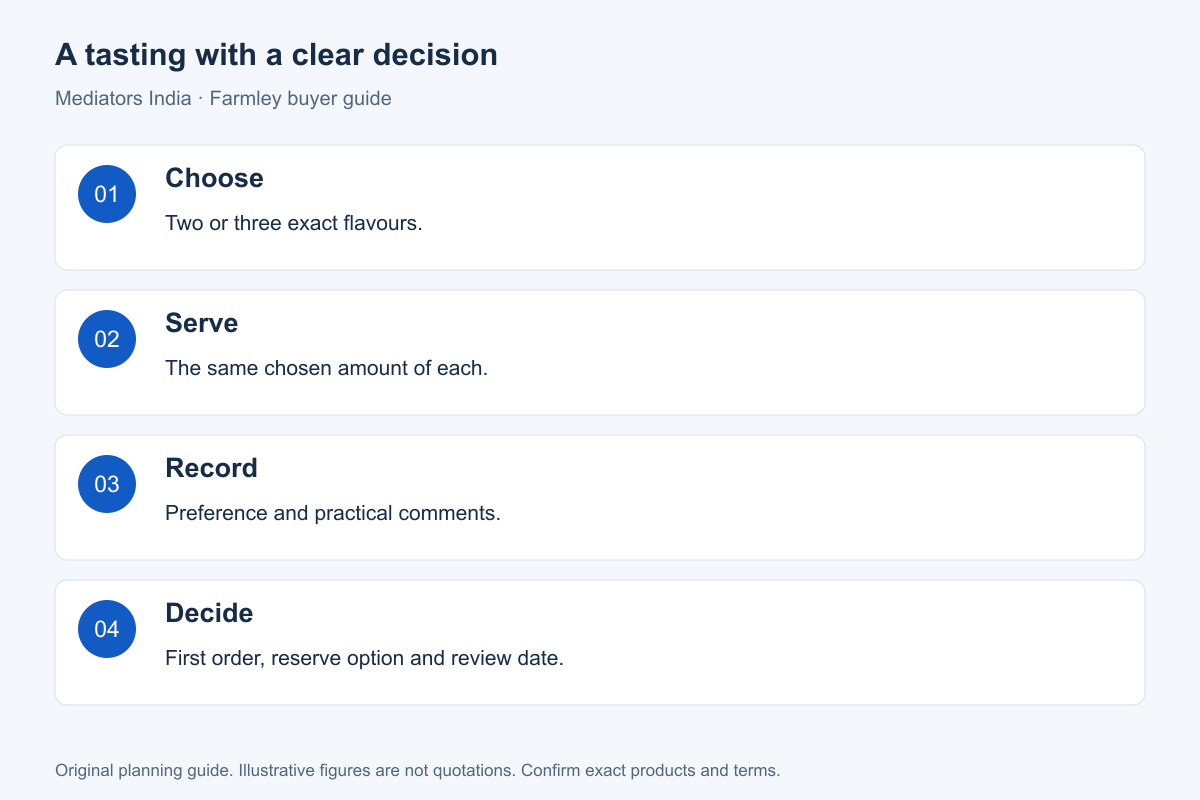
Give the samples a fair comparison
Offer a consistent chosen amount of each sample and keep the packaging nearby. Invite comments on seasoning, texture and whether people would choose it again in that setting. Do not tell the team which product you expect them to prefer.
A simple response is enough: choose again, occasionally or not for me. Ask for a brief reason. There is no need to turn a small pantry trial into a supposedly scientific score or claim a universal favourite.
| Trial record | Sample A | Sample B |
|---|---|---|
| Exact flavour and pack | Record name and weight | Record name and weight |
| Choose again | Count responses | Count responses |
| Main comment | Keep the actual wording | Keep the actual wording |
| Suitable occasion | Desk break or meeting | Desk break or meeting |
| Order decision | Trial quantity or hold | Trial quantity or hold |
Translate preferences into a first order
Here is a hypothetical result, not a Farmley customer survey: out of twenty participants, twelve choose A, six choose B and two choose neither. Among the eighteen who chose one, that is roughly a two-to-one preference. It suggests a trial mix to discuss, not proof that future consumption will follow the same ratio.
Keep the first order short enough to review against use and the pack's actual date and storage guidance. A flavour can be popular at one tasting but move slowly when repeated every day. Log what is taken and what remains.
Keep the label out of the popularity vote
A tasting cannot resolve an ingredient or allergen question. Use the current label for each flavour. The official Himalayan Salted page is a source for that named listing; do not extend its statements to other seasonings or formats.
Avoid “guilt-free” or “best for everyone” language when making the workplace offer. People may have different preferences and dietary needs. Keep the factual product information available without turning personal preferences into health advice.
Review the trial before repeating it
After the chosen trial period, compare packs received, opened and left. Note any changes in attendance, events or complaints so a quieter week is not mistaken for rejection of the product.
For costing, use the actual price per pack and net weight, on the same GST and delivery basis for every option. There are no quoted prices in this guide. Taste acceptance and stock movement help decide what to buy; price per gram helps compare the offers fairly.
Request a flavour-specific sample enquiry with the occasion, expected people and formats you would like to compare. Leave room for a second choice if the first one is unavailable.
Frequently asked questions
How many flavours should we trial?
Two or three is a manageable starting point. That is an editorial suggestion, not a product requirement.
Does the two-to-one example describe actual preferences?
No. It is hypothetical arithmetic showing how to interpret a small tasting.
Can we choose only from the website pictures?
Use pictures to shortlist, then confirm the actual offered SKU and taste it where practical.
Does a good tasting result prove suitability for every guest?
No. Ingredients, allergens and individual needs need separate checks.
When should we reorder?
Review actual stock movement and the supplier’s confirmed lead time rather than automatically repeating the first mix.