“Please send a price for Farmley dry fruits” is an understandable first message. It also leaves the supplier guessing which product, pack and quantity you mean.
A short, precise enquiry makes it easier to compare offers and receive the right stock. This is especially useful when a workplace order has to arrive before a meeting or fit a restricted receiving window.
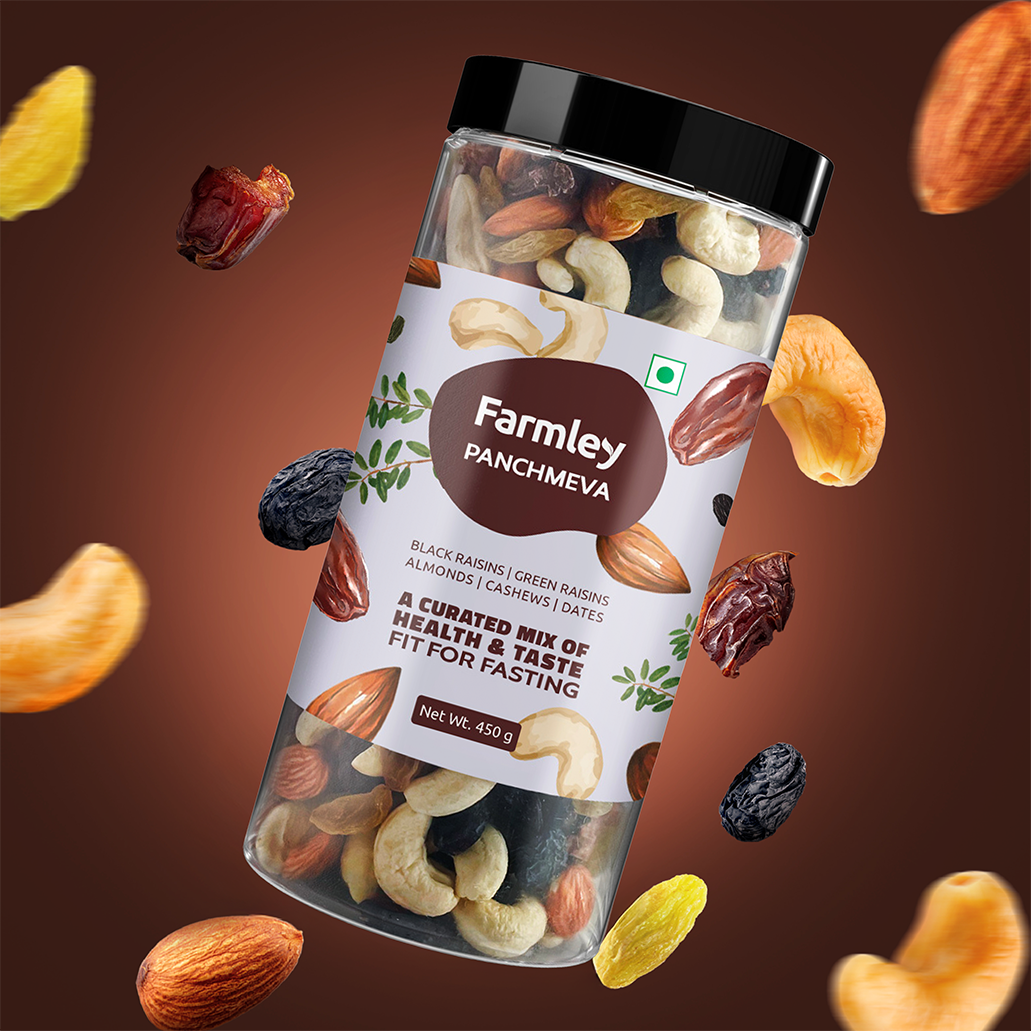
Name the product before the brand category
Start with the exact product or a link to it. “Mix,” “makhana” and “Date Bites” describe different choices. If you have not selected a SKU yet, say which occasion you are buying for and ask for a small shortlist.
The Mediators India Farmley mixes page shows range examples, with individual packs and supply subject to confirmation. Treat it as a discussion starting point; confirm which examples the supplier currently stocks.
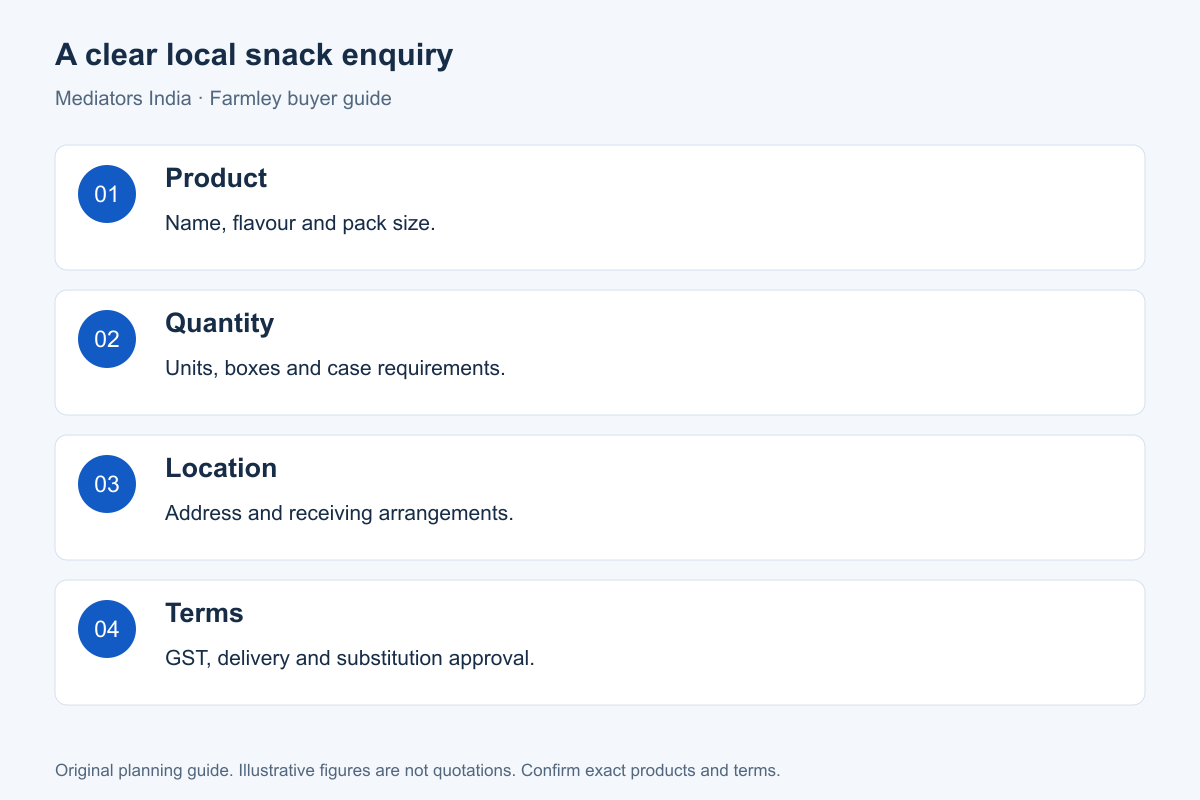
Make the quantity unambiguous
Write both the sale unit and the total required quantity where possible. If your plan is twenty jars, do not leave the word “box” undefined. If the supplier sells cases, ask for the case configuration and how the order will be rounded.
For a hypothetical requirement of forty-five single units sold six to a box, eight boxes provide forty-eight units and leave three units beyond the requirement. That is a rounding example, not an actual Farmley pack format. A different sale configuration changes the order.
Include the receiving details
Give the business location in Chandigarh, Mohali or Panchkula and your required delivery date. Mention receiving hours, an appointment requirement, floor or access restriction if relevant. Ask for address-specific delivery confirmation.
A general online delivery statement from a brand does not establish a Mediators India route, service area or lead time. Keep the locally agreed details in the written quotation before organising the office around them.
Copy this enquiry brief
| Enquiry line | Your details |
|---|---|
| Product | Exact Farmley name, flavour and net pack size |
| Quantity | Units needed and acceptable case rounding |
| Purpose | Pantry, meeting, gifting or resale |
| Location and date | Delivery address and required arrival |
| Quote basis | Unit, box and case prices; GST and delivery |
| Goods check | Current labels, batch dates and pack condition |
| Alternatives | No substitution without agreed approval |
You can send the same brief to each supplier. Compare what is included rather than treating two different pack configurations as the same offer.
Check the goods against the quote
On delivery, count the sale units and match the SKU, pack size and printed dates. Record any shortage, damage or mismatch promptly using the supplier's agreed process. Keep the invoice and product information with the stock record.
For repeat orders, use the same product reference and update the quantity from actual consumption. If the product or pack changes, review it before simply copying last month's purchase order.
Choose the next step you actually need
When taste is still undecided, request samples or available comparison formats before placing a large order. For an agreed product, ask for a full commercial quote. Gift orders also need presentation details and arrival deadlines.
See the Farmley makhana, mixes and Date Bites pages, or send your requirement. Confirm availability, prices and delivery in the proposal before ordering.
Frequently asked questions
Can you confirm local stock from this article?
No. Request current availability for the exact SKU, quantity and delivery address.
Should I ask for a unit price or a case price?
Ask for both and the pack configuration, so you can check the quote against your total requirement.
Does the six-unit example describe Farmley packaging?
No. It is a hypothetical case-rounding example.
Can the supplier send another flavour if ours is unavailable?
Agree a substitution rule in writing. If taste or ingredients matter, the alternative needs review.
What should we keep for repeat orders?
The exact product reference, accepted pack configuration, actual consumption and the latest quotation.