The new box goes at the front of the cupboard. The older packets stay at the back. A few weeks later, nobody is quite sure which pack was opened first.
It is an ordinary pantry problem, and a simple stock routine can make it easier to manage. You do not need a complicated system. You need the current pack instructions, a small log and someone who checks it.

Product reference from the existing Mediators India website; confirm the current offered pack or model and configuration. This is not a customer installation.
Give every product its own instructions
“Coffee premix” is a category, not one storage specification. Different products, pack sizes and after-opening instructions need separate records. Use the label on the actual product and ask the supplier about anything unclear.
For example, the manufacturer's Masala Gold page says to store it in a cool, dry, hygienic place. That does not establish the storage temperature or after-opening life of every coffee, tea or dairy product in your pantry. Keep those distinctions visible.
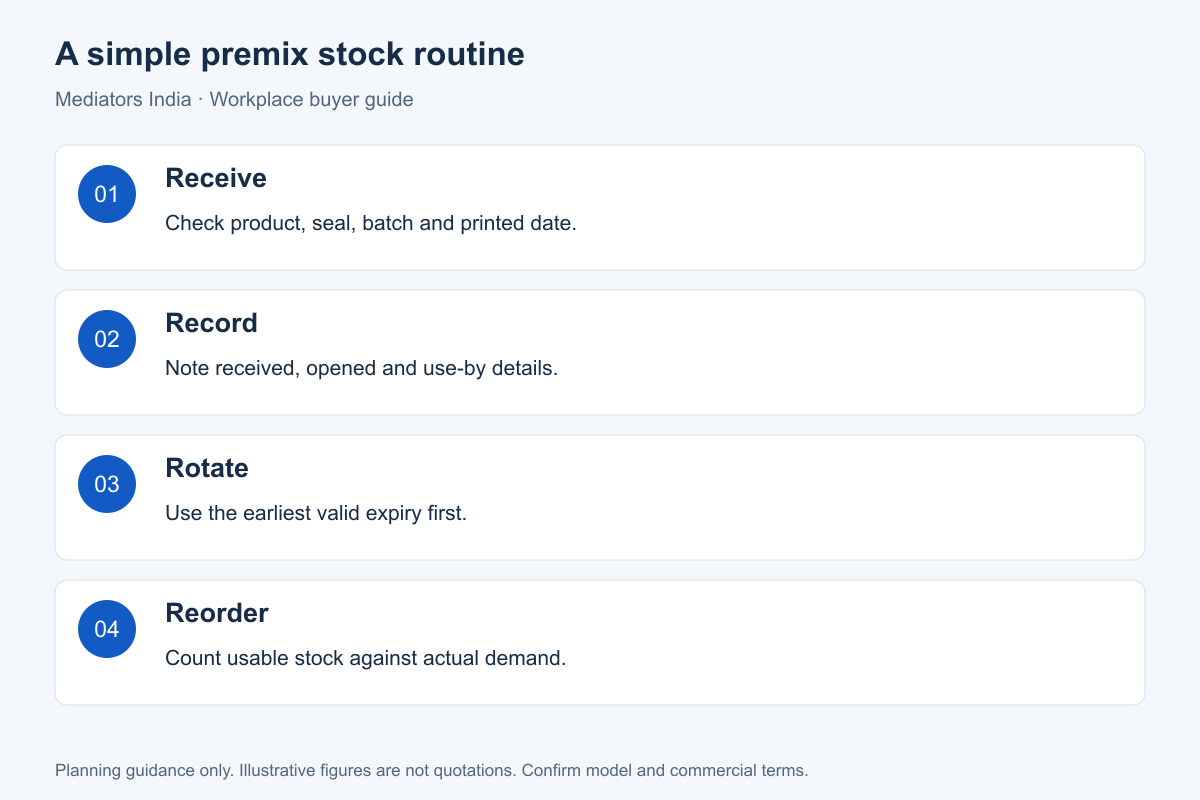
Original planning graphic. Any figures shown are illustrative; confirm commercial and technical details.
Make receiving stock a two-minute check
Match the delivery against the order before putting it away. Check the product name, quantity, pack integrity, batch and printed dates. If the wrong item arrives, separate it while the supplier resolves the issue rather than loading it because the packaging looks familiar.
Write down the quantity received and the person who checked it. Record damage or a short delivery immediately. A useful log helps explain stock movements later; it should not depend on someone's memory of a busy morning.
Use the earliest valid expiry first
Place stock so the earliest valid printed expiry is easiest to reach, while respecting each product's instructions. Keep items with uncertain identity, damaged seals or unresolved date questions out of the usable-stock count until clarified.
Opened stock needs its own record. Note the opening date and whatever after-opening limit the manufacturer actually gives. Do not invent a universal seven-day or thirty-day rule. An unopened shelf life is not the same thing as an opened-pack instruction.
| Log field | What the pantry records | Why it helps |
|---|---|---|
| Product and batch | Exact name and batch reference | Identifies the stock being used |
| Received and printed date | Delivery date and label date | Supports rotation |
| Opened on | Date the pack was opened | Keeps opened stock traceable |
| After-opening instruction | Label guidance or supplier clarification | Avoids a guessed holding period |
| Balance and action | Usable quantity, reorder or query | Turns the check into a decision |
Keep stock handling separate from machine servicing
Follow the refill and cleaning training for the specific equipment. Nestlé's operation guide has different sections for different machines; it is not one interchangeable procedure. Ask the trained operator to demonstrate the applicable routine.
Do not turn a stock-control article into a repair manual. If powder is not feeding correctly, identify the issue and contact the appropriate support person. Changing ingredients or machine settings without approval can make the original problem harder to understand.
Put a number on the reorder point
Here is a stock-planning example, not a manufacturer instruction: assume usage is 1.2 kg per working day, delivery takes three working days, and your chosen buffer is two working days. The trigger is 1.2 × (3 + 2), or 6 kg of usable stock.
Confirm the real lead time and replace the usage estimate with observed stock consumption. This example sets no product price, shelf life or service promise. It assumes the proposed quantity can be used within the actual product instructions; check that before ordering.
When an office is quieter, recalculate. A buffer based on last month's peak usage can become unnecessary stock if attendance drops. Also check case sizes, contractual purchase requirements and the space available for proper storage.
Make the handover easy
Put the log where the backup operator can find it. Include the supplier contact, reorder trigger and unresolved pack questions. Once a week, compare physical stock with the written balance and explain differences such as spills, samples or returns.
Browse premix options or ask for current pack instructions. Include the exact product and machine model so the advice matches what is in your pantry.
Frequently asked questions
How long does an opened premix pack last?
Use the exact product label and manufacturer clarification. There is no after-opening period established by this guide.
Can all powders go into the same canister?
Use only the ingredient and canister arrangement approved for that model. Ask the trained operator or supplier before changing products.
Does the printed shelf life start when we receive the pack?
Do not assume that. Read the date wording on the pack and clarify any uncertainty before using it.
How much reserve stock should we keep?
Calculate it from actual consumption, confirmed delivery lead time and a chosen buffer, then check storage capacity and product dates.
Is this a machine cleaning guide?
No. It is a stock routine. Cleaning and refill instructions must come from the applicable manufacturer guidance and training.