“The margin is good” is a useful conversation starter. It is not yet a purchase calculation.
Before a retailer orders Alan’s chips, write down the proposed selling price and the cost of the actual sellable packs. Keep margin and markup separate, and do not turn a packet’s printed MRP into a promise about what the shop will realise.
Start with the exact order unit
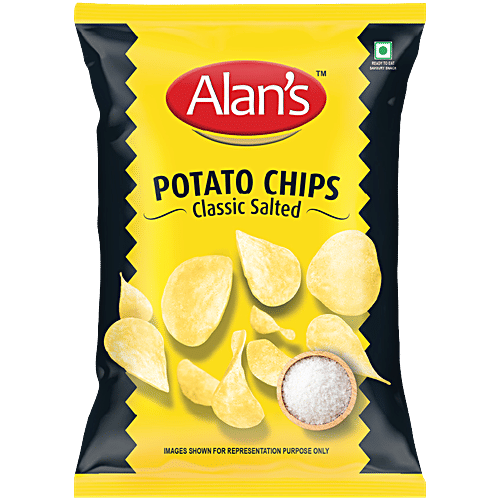
Record the flavour, net quantity, offered pack, retail units per outer and purchase quantity. Use the photographed Classic Salted packet only as a catalogue reference. The catalogue photograph does not confirm the MRP or purchase terms of a current offered batch.
The Mediators India RCPL page is a product-range starting point. Exact packs and commercial terms need confirmation. No internal ERP rate or private sales total is used in this worksheet.
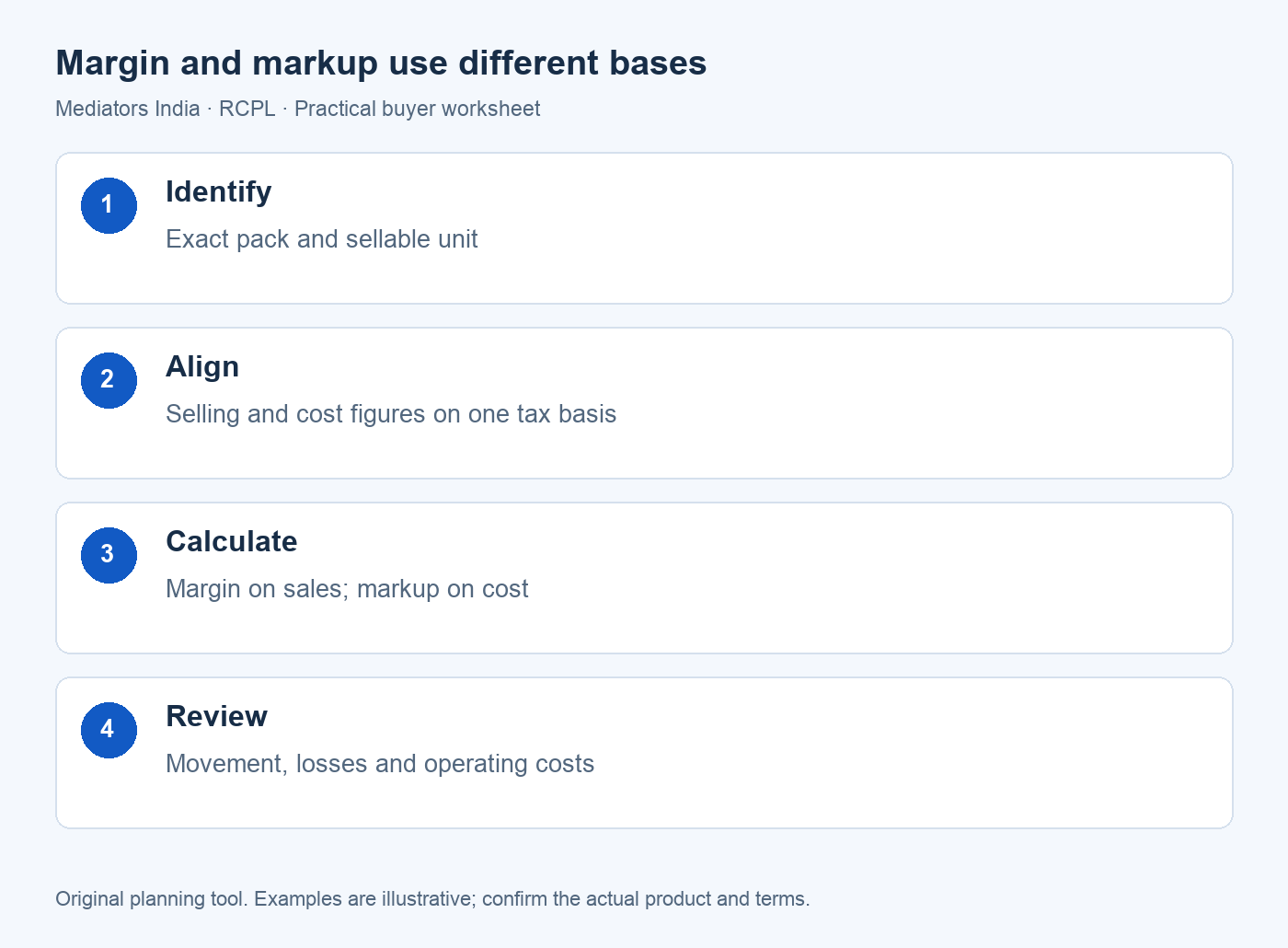
Put every figure on the same basis
For this illustration, selling value and purchase cost are both stated excluding GST. In an actual comparison, first confirm how tax is represented on the quotation and selling record; do not mix an inclusive figure with an exclusive one. Tax recovery or accounting treatment depends on the business and is outside this simple gross-margin example.
| Field | Calculation |
|---|---|
| Realised selling value per pack | Actual expected selling amount on the chosen basis |
| Landed cost per sellable pack | Agreed goods cost plus allocated relevant charges |
| Gross contribution per pack | Selling value minus landed cost |
| Gross margin percentage | Gross contribution divided by selling value × 100 |
| Markup percentage | Gross contribution divided by landed cost × 100 |
Enter the price you genuinely expect to realise. A display MRP alone is not evidence of that selling amount.
Check an illustrative calculation
Invented INR assumptions prepared 27 October 2026, excluding GST: selling value ₹20 per pack and landed cost ₹16 give ₹4 gross contribution. Margin is ₹4 ÷ ₹20 = 20%; markup is ₹4 ÷ ₹16 = 25%. These figures do not state an actual Alan’s MRP, dealer margin or Mediators India quote.
The example assumes all purchased units are sellable and sold. It excludes rent, staff, utilities, financing, expiry, damage and other operating costs. Gross contribution is not net profit. If some packs become unsellable, record that effect rather than spreading the original optimistic calculation across the whole order.
Keep schemes conditional until confirmed
Ask how any quoted discount or scheme works, which units qualify and what documentation is needed. Do not reduce your cost using a benefit that has not been agreed or earned. Keep unconfirmed credit notes out of a completed purchase comparison.
Decide with cost and sell-through together
A larger order can commit more money even if a confirmed unit cost is lower. Compare the quantity with your actual movement and date requirements. The Alan’s starting assortment guide addresses flavour allocation; this worksheet checks the arithmetic behind a proposed order.
Request the exact quotation with the pack reference, units, charge breakdown and GST basis. Fill in the real figures before deciding.
Frequently asked questions
Is the example a confirmed Alan’s dealer margin?
No. The ₹20 and ₹16 inputs are invented planning assumptions, not current MRP, trade rates or a commercial offer.
What is the difference between margin and markup?
Margin divides gross contribution by selling value. Markup divides it by cost. With the stated example they are 20% and 25% respectively.
Does gross margin equal net profit?
No. The worksheet excludes operating costs and the stated risks. It is a simple product-level calculation.
Should I include an unconfirmed scheme in cost?
Keep it separate until its conditions and entitlement are confirmed. Do not assume a future benefit is already received.
Why use the same GST basis?
Mixing inclusive and exclusive inputs distorts the comparison. Confirm the actual quote and accounting basis used by your business.