Compare Alan’s chips flavours with a small tasting before choosing a team or counter order. Asking for whichever flavour everyone likes can produce several conflicting answers. A short scorecard makes the preferences easier to use.
You do not need to turn it into an event. Put the named options in front of a small group, keep the packets available and ask what people would actually choose again.
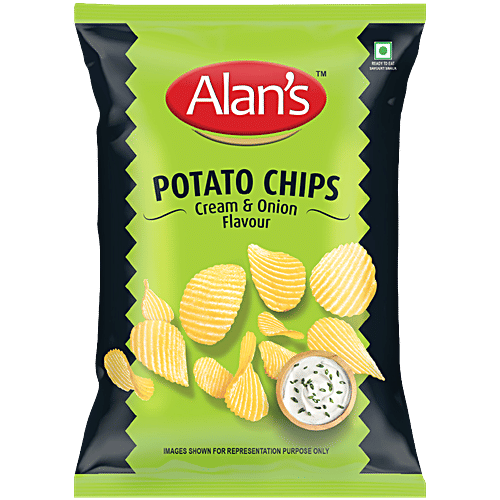
Give Alan’s chips flavours the same tasting conditions
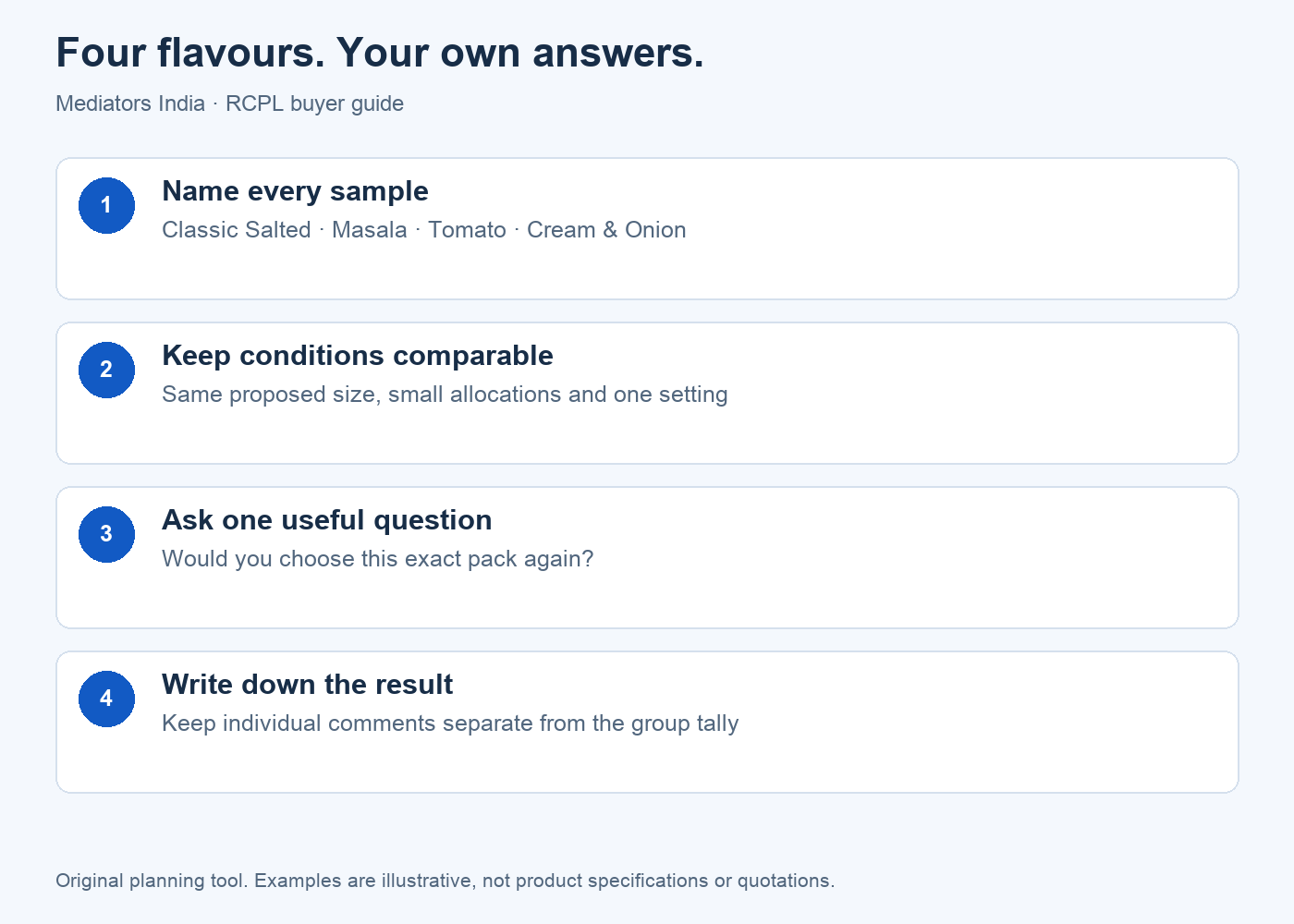
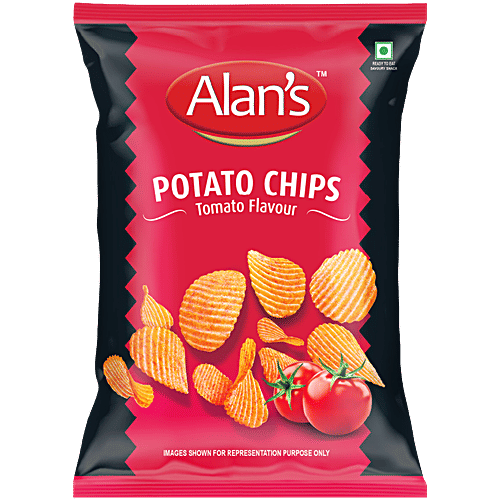
The reference packs show Classic Salted, Masala, Tomato and Cream & Onion. Those names identify the choices; they do not tell you how your group will rate them. Avoid promising that one is milder, richer or more popular unless you have evidence for the exact product and the claim you want to make.
Where possible, use the pack format being considered for the order. Trying one format and buying another can change the experience you are testing. Keep samples in the same setting, offer small comparable allocations and note whether the pack was freshly opened.
Keep the label with the sample
If you put chips into bowls, keep the original packets available and make the flavour names easy to match. People should be able to check the actual ingredient and allergen information before deciding whether to taste. A bowl label is not a substitute for the pack.
If someone does not want to take part, leave their score blank. “Did not try” and “did not like” are different answers. The tasting is a preference exercise, not a nutrition assessment or a way to decide suitability for someone else.
Use a scorecard that answers the buying question
A five-point liking score can be helpful, but ask a practical question as well: would the person choose this exact pack again? Keep one space for their own words. “Too much seasoning for my usual break” tells you more than a score with no explanation.
| Sample | Tried? | Liking score,1–5 | Would choose again? | Comment |
|---|---|---|---|---|
| Classic Salted | Yes / No | Leave blank until tried | Yes / No / Maybe | Participant’s words |
| Masala | Yes / No | Leave blank until tried | Yes / No / Maybe | Participant’s words |
| Tomato | Yes / No | Leave blank until tried | Yes / No / Maybe | Participant’s words |
| Cream & Onion | Yes / No | Leave blank until tried | Yes / No / Maybe | Participant’s words |
No results are filled in here. The sheet is a tool for collecting your group’s preferences, not a ready-made flavour ranking.
Read the answers without forcing a winner
For example, if five of eight people who tried a sample say they would choose it again, the result is five out of eight tasters for that sample. It is not five out of every employee, customer or snack buyer. The numbers here are an illustration of the denominator, not a reported tasting.
A split result may support a two-flavour order instead of one unanimous choice. Keep availability and the supplier’s actual carton quantities in mind before translating votes into a purchase. A preferred flavour that nobody could try should stay “not assessed,” not drop to the bottom of the table.
Test the setting as well as the flavour
For an office break, ask whether the chosen pack is convenient to take away or share. For a shop, a staff tasting can help describe the range, but it cannot replace customer sales observations. Keep those two kinds of evidence separate.
If the first trial is inconclusive, ask for another sample format rather than buying a large quantity to resolve the debate. A small amount of useful feedback is enough to make the next question more precise.
Turn the outcome into an order brief
Send the preferred flavour names, the pack formats tested, the quantity required and any unresolved label questions. The RCPL range page gives the range context; an enquiry with your tasting brief lets us discuss the exact offered packs and terms. Keep the completed scorecard for the next review instead of treating one tasting as a permanent menu.
Frequently asked questions
Which Alan’s chips flavour is best?
There is no universal answer in this guide. Ask the people buying or serving the exact packs, record their own preferences and keep the size of the sample visible.
Should I fill in expected scores before the tasting?
No. Leave scores blank until someone tries that sample. Otherwise the worksheet can steer the result it is supposed to collect.
Can an office tasting predict shop sales?
Not reliably by itself. Staff preference and customer purchasing are different observations. Use actual counter sales to assess a retail trial.
Should packets be kept after the chips are decanted?
Keep the relevant packaging available while the samples are offered so participants can read current product and allergen information.
What if the group is evenly split?
A mixed order may be worth asking about. Confirm the supplier’s actual sale units and mixing policy before turning the votes into pack quantities.