A carton arrives with one side pushed in. The packets inside may need checking, but the delivery is being hurried along because the counter is busy.
A useful receiving process makes room for that exception without turning it into an argument or an invented claim. Record what you can actually see, identify the packs involved and keep the available-stock count honest while the issue is resolved.

Agree how delivery exceptions will be handled
Before placing an Alan’s chips order, ask what evidence is needed for shortages or damage, who should be contacted and what terms apply to returns, credit or replacement. Do not assume that every supplier follows the same process or that a replacement is automatic.
Keep the agreed purchase reference available to the receiving person. The RCPL range page helps identify the category, but the written order must name the actual flavour, pack and unit count.
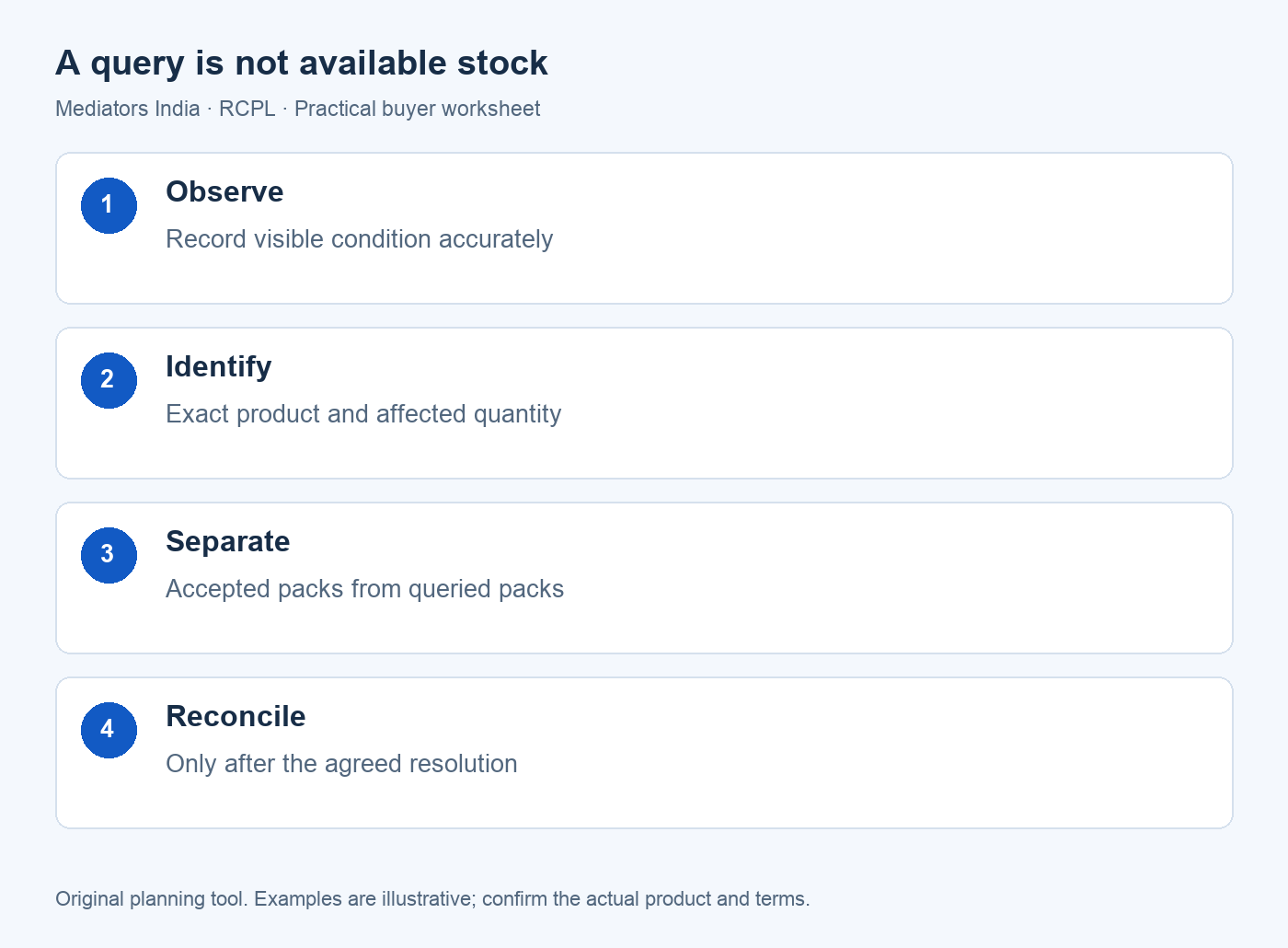
Separate observation from conclusion
A dented outer carton is an observation. It does not prove that every retail packet inside is defective. Equally, an intact outer does not replace the checks agreed for the delivery. Use a clear description of visible condition, and do not claim to know the product’s internal state from a distant photograph.
| Evidence | Useful detail |
|---|---|
| Order match | Exact Alan’s flavour and offered pack |
| Outer condition | Location and nature of visible damage |
| Pack exceptions | Identifiable quantities kept for checking |
| Count difference | Ordered, physically received and queried units |
| Follow-up | Time reported and person handling resolution |
Use photographs where appropriate to show both identity and the visible issue. Keep original labels and packaging available for the agreed review process.
Protect the stock count from wishful arithmetic
Illustrative example: 48 retail packs are expected, 48 are physically received, and three need review for visible damage. Record 45 accepted and three queried until the decision is made. The example does not prescribe an acceptable damage rate or assert an actual Alan’s delivery experience.
Do not quietly record all 48 as available and expect the next stock count to explain the difference. Keep disputed quantities identifiable and separate under the shop’s process.
Close the commercial query explicitly
Record the supplier’s response and the resolution actually agreed. If a replacement or credit is confirmed, connect it to the original exception. A message saying “we will check” is not a completed credit or a delivered replacement.
Once settled, update the accepted quantity and file the evidence with the receiving record. Avoid posting private invoice, customer or contact information in public product reviews when a direct supplier query is the appropriate route.
Improve the next dispatch brief
If the same receiving issue recurs, discuss handling and delivery arrangements with the supplier before the next order. For stock reconciliation, keep opening stock, receipts, sales and other movements separately visible. Send a supply enquiry with the exact product and receiving requirements so the terms can be confirmed up front.
Frequently asked questions
Does a dented carton prove all packets are damaged?
No. Record the visible condition and identify what needs checking. Avoid conclusions that the evidence cannot support.
Is replacement guaranteed?
No. Use the remedy and evidence requirements actually agreed with the supplier.
How should queried packs appear in stock?
Keep them separate from accepted available units until the review is resolved.
What photographs are useful?
Images showing the relevant product identity and visible exception are more useful than a distant picture of a stack.
When is a damage query closed?
When the agreed resolution has actually occurred and the record and quantities have been reconciled.