The team likes the sample. That is encouraging, but the shop still needs to find out whether customers buy it at the offered price and pack.
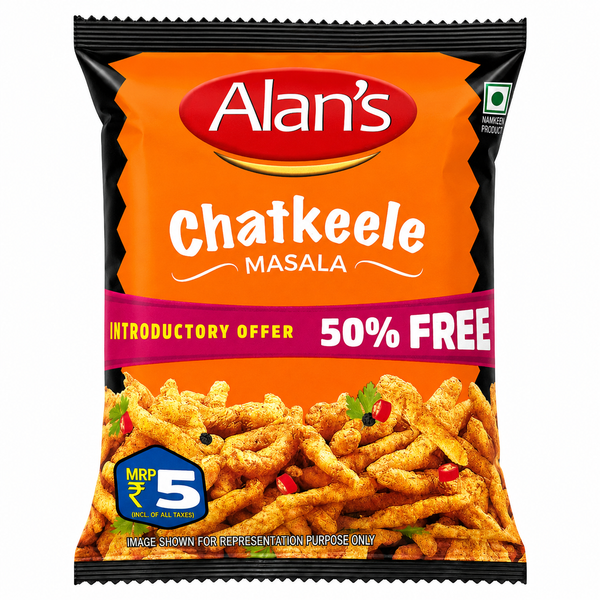
For Alan’s Chatkeele, make the next decision a small, countable retail trial. The aim is to learn about your outlet’s movement before increasing the order, not to turn a few positive comments into a sales forecast.
Define the trial before the stock arrives
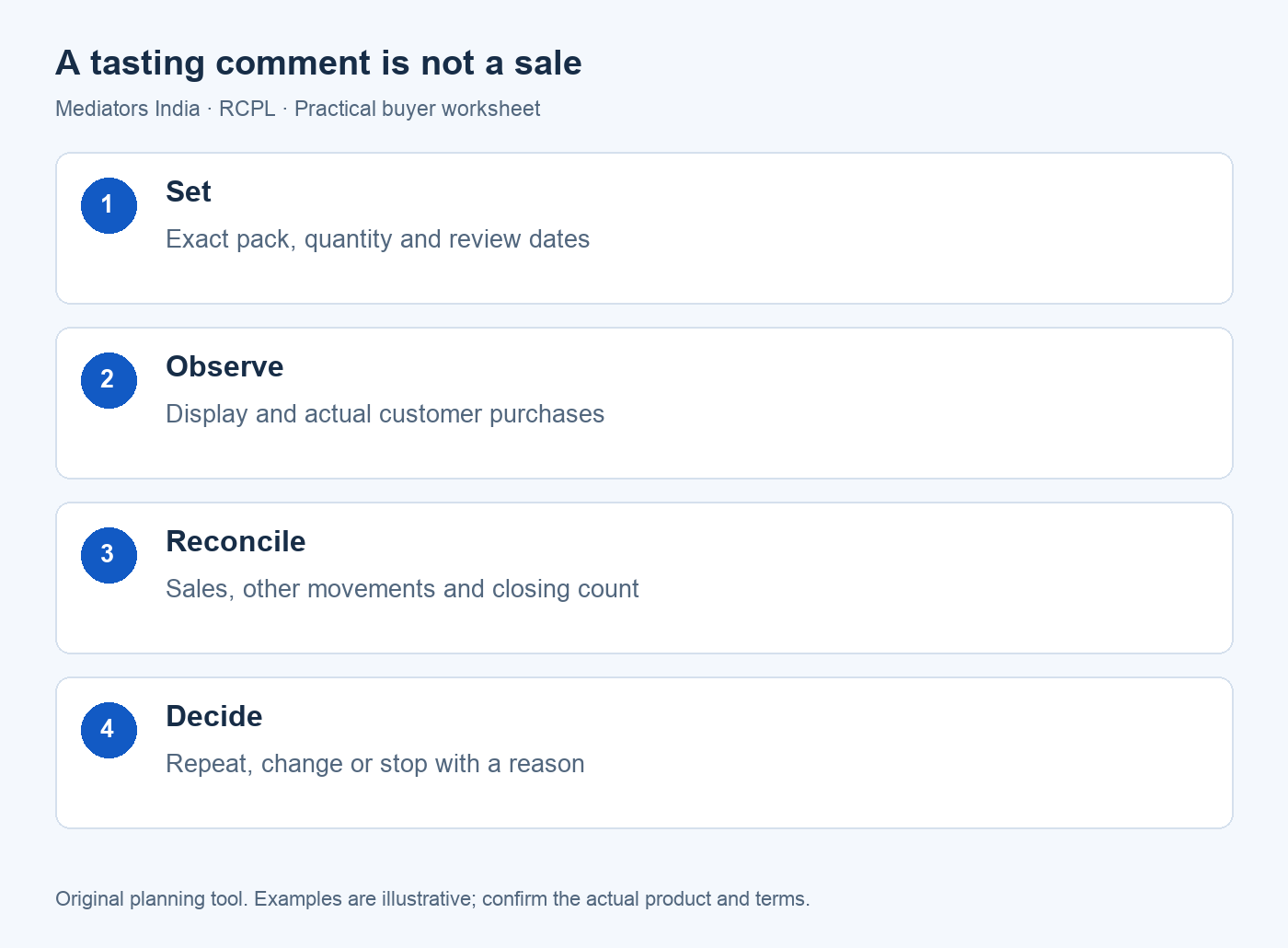
Write down the exact product reference, offered retail pack, trial quantity, selling-price basis and review dates. Ask what the supplier can actually offer; there is no minimum order or sale-or-return promise in this guide.
Keep the trial limited enough that staff can count it accurately. A two-week review can be an editorial planning choice if it suits the outlet, but it is not a product shelf-life instruction or a claim about how quickly Chatkeele should sell.
Keep the display conditions visible
Record where the packs are placed, how they are identified and whether the price is clear. If you move the display or run an offer during the trial, note the date. Otherwise a change in sales may be attributed to the product when the shop changed something else.
Do not manufacture customer quotations or fill the review sheet with expected results. Staff can record actual questions or reasons volunteered by customers without collecting unnecessary personal information.
| Trial field | Record |
|---|---|
| Opening eligible stock | Exact number of retail packs |
| Receipts | Additional trial stock received |
| Sales | Packs actually sold |
| Other movements | Transfers, damage or other recorded adjustments |
| Physical closing stock | Count at the agreed review point |
The figures should reconcile. A missing pack is not automatically a sale.
Read the count carefully
Illustrative example: 24 opening packs plus no additional receipts, 15 sold, one recorded damaged and eight physically remaining reconcile to 24. Fifteen out of the original 24 packs were sold: 62.5% of opening stock. This is invented arithmetic, not a report of Chatkeele performance or a national benchmark.
Do not count the damaged unit as a sale or call gross sales proceeds profit. Review the trial’s actual selling value and confirmed landed cost separately if you are evaluating the commercial result.
Make a decision with a reason
You might repeat the same quantity to gather more evidence, change the display, request a different offered pack, or stop the trial. Record the reason. A larger order should follow evidence and usable stock needs, not the desire to make the trial look successful.
The Chatkeele first-order guide covers product and quotation checks. This trial covers what happens after stock reaches your own outlet. The RCPL product page remains a starting point for a range enquiry; actual pack availability and terms need confirmation.
When placing the next enquiry, share the exact reference and proposed quantity. Keep your internal sales figures private unless you choose to share them directly for planning.
Frequently asked questions
Does a successful staff tasting predict retail sales?
No. Record actual customer purchases under the outlet’s real display and price conditions.
Is two weeks the required trial duration?
No. It is a possible review interval chosen by the outlet, not a manufacturer requirement or shelf-life statement.
How is the example sell-through calculated?
Fifteen sold packs divided by 24 opening packs gives 62.5%. The numbers are illustrative, not measured product performance.
Should damaged or transferred packs count as sold?
No. Record them as separate movements so the physical count reconciles.
Does the trial include sale-or-return terms?
Only if expressly agreed with the supplier. No such arrangement is promised here.